


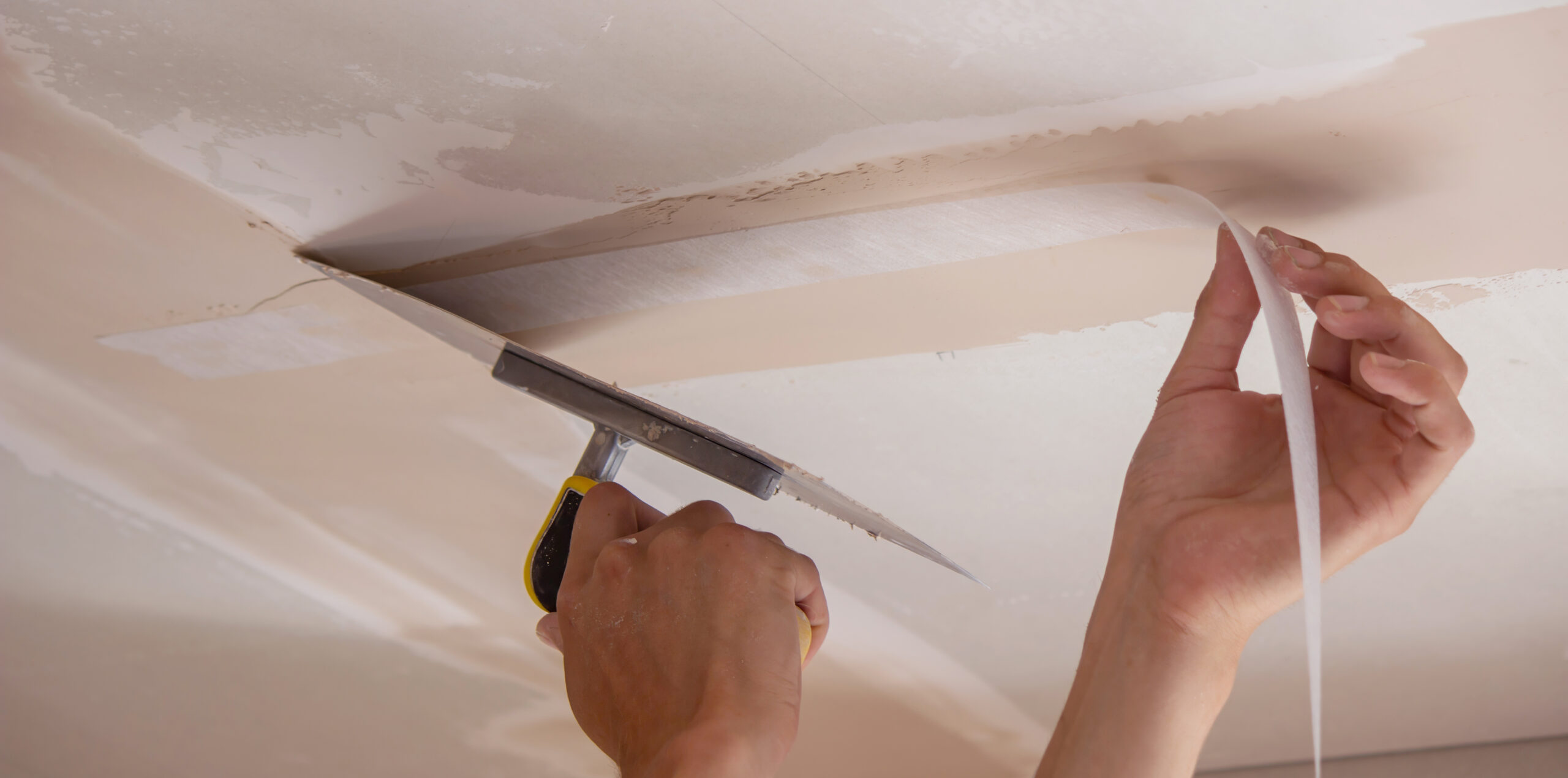
Drywall ceiling repair costs in Los Angeles can vary significantly based on the size and nature of the damage, the complexity of matching textures, and local labor rates. Understanding these factors will help homeowners budget effectively for professional repairs in 2025.
Small crack patch: $100–300
- Scope: Typically involves repairing hairline cracks, minor stress cracks along seams, or very small nail pops.
- Process: Cleaning, light widening, taping with mesh or paper tape, applying 1-2 coats of joint compound, light sanding, and priming.
- Cost Factors: Minimal labor, quick drying times.
- Note: This estimate usually applies to a single, isolated crack. Multiple small cracks might incur higher costs.
Moderate hole repair: $200–600
- Scope: Addresses holes roughly the size of a fist to a dinner plate (e.g., from a falling object, old light fixture removal).
- Process: Cutting out the damaged section, installing a backer board or patching material, applying multiple layers of joint compound, sanding, and priming.
- Cost Factors: More labor-intensive due to cutting and framing out the patch, requiring more joint compound. Matching texture adds to the cost.
Large area repair & texture blending: $500–1,500+
- Scope: Deals with larger sections of damaged drywall (e.g., water damage from a leaky roof, significant ceiling sagging, larger holes over 1-2 sq ft, or extensive crack networks).
- Process: May involve cutting out and replacing entire drywall panels, installing new drywall, extensive taping and mudding, multiple coats, and significant time dedicated to blending the repair area with existing ceiling texture.
- Cost Factors: High labor time, potential need for multiple visits (due to drying times), specialized tools for texture matching (e.g., hopper gun for popcorn, specific trowels for knockdown). If water damage is present, source of leak must be fixed first, adding to overall project cost.
- Note: Costs can easily exceed $1,500 for very large areas, complex textures, or if structural repairs are needed before drywall can be fixed.
Cost factors: size, texture, prep, labor
- Size of Damage: This is the most direct determinant. Larger areas require more material and significantly more labor.
- Type of Damage: A clean hole is often easier to repair than a complex network of spiderweb cracks or severe water damage that has compromised the drywall’s integrity.
- Ceiling Texture:
- Smooth: Easiest and least expensive to repair, as blending is primarily about sanding.
- Light Texture (e.g., light orange peel): Relatively simple to match with aerosol sprays.
- Heavy or Unique Texture (e.g., popcorn, heavy knockdown, hand-troweled): Significantly increases cost due to the skill and time required to seamlessly blend the new texture with the old. Often requires specialized equipment.
- Preparation Required: Extensive cleaning, removal of loose debris, or dealing with mold/mildew will add to the cost.
- Labor Rates in Los Angeles: As a metropolitan area, labor costs in LA are higher than the national average, directly impacting the final price.
- Material Quality: While material costs for drywall compound and tape are relatively low, using specialized primers or texture products can add slightly to the overall cost.
- Access: Difficult-to-reach areas (e.g., very high ceilings, cramped spaces) can increase labor time and cost.
DIY cost vs hiring a pro
DIY Cost:
- Materials: $20 – $100+ (for small to moderate repairs: joint compound, tape, sandpaper, basic tools, primer, paint).
- Time & Skill: Requires significant time, patience, and some learned skill. Learning curve can be steep for texture matching.
- Risk: High risk of poor finish (visible patch, uneven texture, cracks reappearing) if not done correctly, leading to frustration and potentially needing professional help later.
Hiring a Pro Cost:
- Investment: Higher upfront cost.
- Expertise & Tools: Professionals have the experience, specialized tools (e.g., for sanding, texture application), and techniques to deliver a seamless, durable repair.
- Efficiency: They complete the job faster and with less mess for the homeowner.
- Quality & Warranty: Reputable pros often offer a warranty on their workmanship.
For any but the smallest, simplest hairline cracks, hiring a professional for ceiling drywall repair is usually the best value due to the difficulty of achieving a seamless, durable finish, especially with textured ceilings.
Tips to save: sample area estimates, bundle with paint jobs
- Get Multiple Quotes: Always obtain detailed quotes from at least three different drywall repair contractors in Los Angeles.
- Be Specific: Provide clear details about the size and type of damage. If possible, send photos.
- Texture Sample: If your ceiling is textured, offer a small, inconspicuous area as a sample for the contractor to match for their quote.
- Bundle with Other Jobs: If you have multiple drywall repairs (e.g., ceiling cracks, wall holes) or are planning a full room repaint, ask if the contractor offers a discount for bundling services. This can often save on mobilization fees.
- Prep Yourself (Carefully): You can save a small amount by performing basic prep like clearing furniture, laying drop cloths, and removing loose debris, but always discuss this with your contractor first to ensure you don’t interfere with their process.
LA Home Builders provides professional drywall ceiling repair services throughout Los Angeles, from minor crack fixes to extensive damage restoration. Our experienced team ensures seamless repairs and perfectly matched textures, restoring your ceiling’s integrity and aesthetic.