
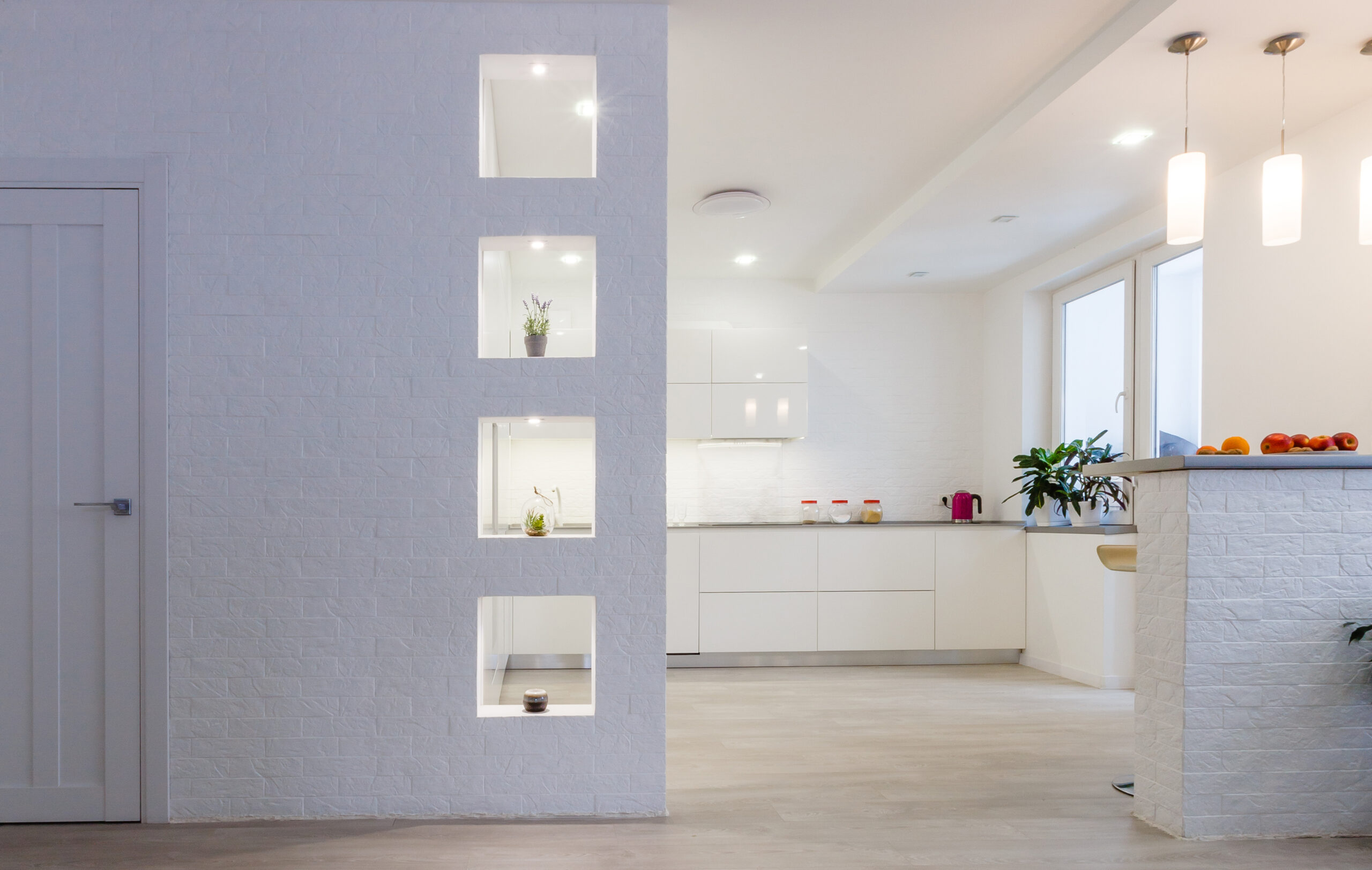
Selecting the right type of drywall for your kitchen is crucial, as this high-traffic, moisture-prone area demands more resilience than standard living spaces. The right choice can prevent costly issues like mold, mildew, and structural damage down the line.
Standard vs moisture-resistant drywall (green board)
Standard Drywall (White Board):
- Characteristics: Most common and least expensive type of drywall. It has a gypsum core with a paper facing.
- Use in Kitchen: Acceptable for most dry, general wall areas of the kitchen that are unlikely to experience direct water exposure or high humidity. However, it’s not ideal for areas near sinks, dishwashers, or stoves where moisture is prevalent.
Moisture-Resistant Drywall (Green Board):
- Characteristics: Features a paper facing treated to resist moisture. It has a slightly waxy coating and a green color, making it easy to identify. While “moisture-resistant,” it is not waterproof and should not be used in areas of direct water exposure like inside showers.
- Use in Kitchen: A much better choice than standard drywall for kitchen walls and ceilings. It’s highly recommended for areas above countertops, around the sink, near the dishwasher, and behind the stove where humidity and incidental splashes are common. It helps prevent mold and mildew growth.
Mold-resistant options near sinks/stove
Beyond green board, specialized mold-resistant drywall offers enhanced protection for particularly vulnerable areas:
Mold Guard Drywall (e.g., Gold Bond BRAND XP® Gypsum Board):
- Features: Combines moisture and mold resistance. Its paper facing is treated with an antimicrobial agent, and the gypsum core itself may also be formulated to resist mold growth. Often purplish in color.
- Benefits: Superior protection against mold and mildew compared to green board, making it excellent for kitchen walls and ceilings, especially in humid climates or areas with less ventilation.
Purple Board (e.g., National Gypsum’s PURPLE® family of products):
- Features: Designed for enhanced mold, mildew, and moisture resistance, often with improved fire resistance and sound control properties depending on the specific product.
- Benefits: A premium option for kitchens, offering comprehensive protection in a demanding environment.
These mold-resistant options are highly recommended for the entire kitchen, especially the lower sections of walls and areas prone to splashes.
Prefinished vs textured areas
- Prefinished Drywall: Less common in residential kitchens but available for specific applications. It comes with a factory-applied vinyl or other finish, eliminating the need for painting. Not typically used for general kitchen walls due to style limitations.
- Textured Areas: If your kitchen ceiling or walls have a texture (e.g., knockdown, orange peel), consider the type of drywall that best accepts or replicates that texture. Standard and green board are equally receptive to textures. Mold-resistant boards also accept texture well.
Benefits of cement board behind backsplash
While drywall is suitable for most kitchen walls, cement board is the preferred material behind tiled backsplashes and any area where direct water exposure is highly likely (e.g., inside a custom shower, or behind a sink where water might regularly pool).
- Waterproof/Water-Resistant: Cement board does not contain paper facing, making it inherently resistant to water damage and mold growth. It won’t soften or disintegrate when wet.
- Tile Adhesion: Provides an excellent, stable substrate for tile adhesion, reducing the risk of cracked grout or loose tiles over time.
- Stability: It is very stable and doesn’t expand or contract significantly with moisture changes, which helps prevent tile cracking.
Recommendation: Use cement board for the area directly behind your kitchen backsplash, extending slightly beyond the tiled area. For the rest of the kitchen walls and ceiling, use green board or, even better, a dedicated mold-resistant drywall.
Installation & paint primer tips
- Installation: Install moisture-resistant and mold-resistant drywall like standard drywall. Ensure proper fastening to studs and use appropriate joint compound (mold-resistant compound is available for enhanced protection).
- Taping: Use fiberglass mesh tape or paper tape with joint compound for seams.
- Priming: Always prime new drywall thoroughly with a high-quality acrylic latex primer (or a mold-inhibiting primer) specifically designed for drywall. This creates a uniform surface for paint, ensures better adhesion, and helps prevent mold and mildew.
- Paint Type: Finish with a high-quality kitchen and bath paint (often a satin or semi-gloss finish) that contains mildewcides and is highly washable.
Cost vs performance considerations
- Cost: Moisture-resistant (green board) and mold-resistant drywall are slightly more expensive than standard drywall (often $0.10 – $0.30 more per square foot). Cement board is also slightly more expensive.
- Performance: The small increase in cost for moisture- and mold-resistant drywall provides significant long-term performance benefits, including reduced risk of mold, mildew, and costly repairs down the line.
- Value: The added expense is a worthwhile investment for a kitchen environment, contributing to a healthier and more durable space.
LA Home Builders understands the specific requirements for building durable and healthy kitchens in Los Angeles. We expertly select and install the right type of drywall, including moisture- and mold-resistant options and cement board for tiled areas, ensuring your kitchen is not only beautiful but also built to last.