


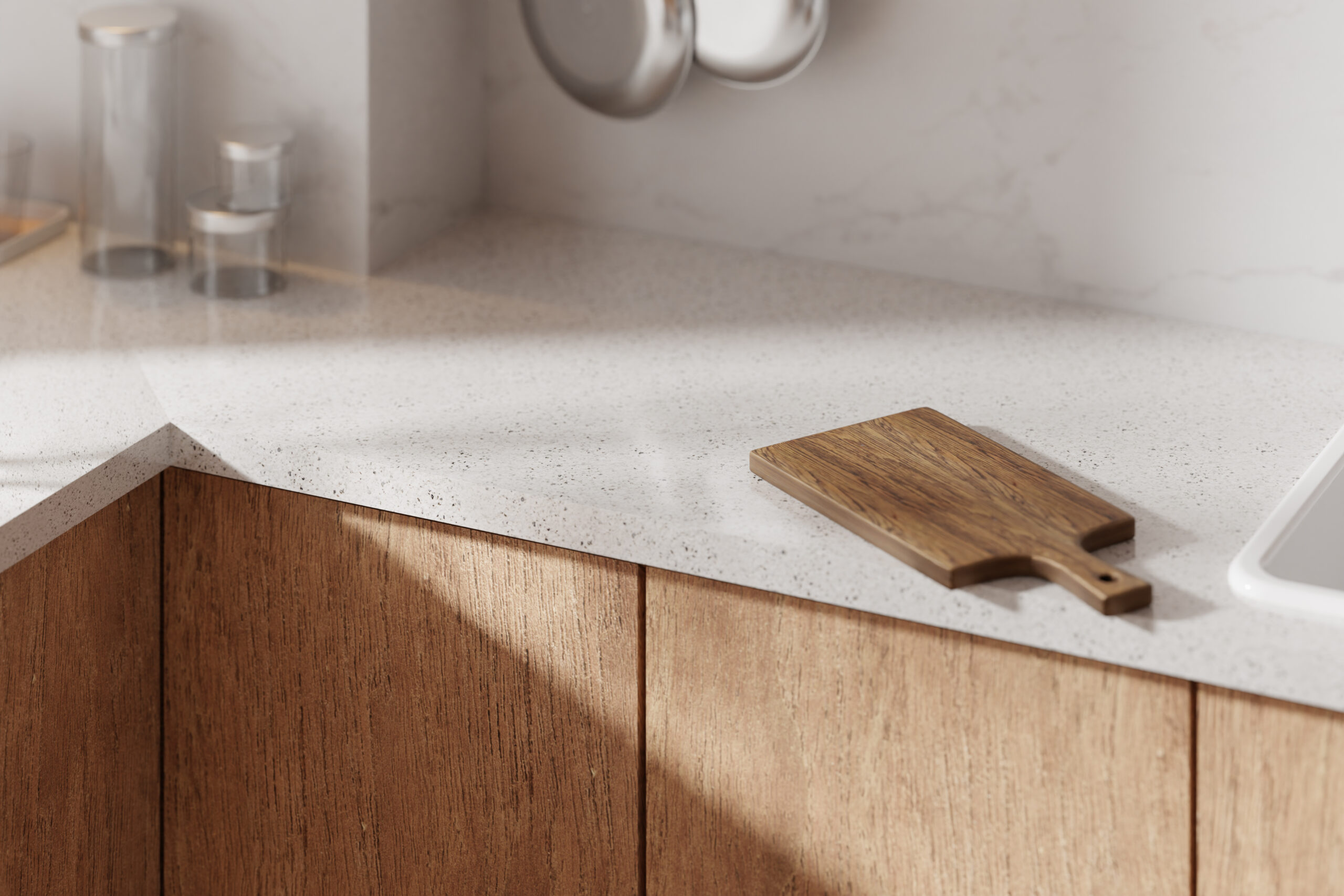
Outdated or worn kitchen countertops can significantly detract from your kitchen’s overall appeal. While a full replacement offers the most dramatic transformation, it can also be a costly and time-consuming endeavor. For homeowners seeking a more budget-friendly and quicker refresh, the idea of painting existing countertops often comes to mind. But is it truly a viable solution for a kitchen’s high-traffic, high-moisture environment? LA Home Builders explores the possibilities, advantages, disadvantages, and step-by-step process of painting kitchen countertops, helping you decide if this DIY approach is right for your home.
When painting countertops makes sense
Painting kitchen countertops is a specific solution that makes sense under certain circumstances. It’s not a universal fix, but it can be a highly effective temporary or budget-conscious update.
- Tight Budget: When a full countertop replacement is not financially feasible, painting offers a significantly cheaper alternative.
- Temporary Solution: Ideal for improving aesthetics in a rental property or a home you plan to sell soon, where a high return on a major renovation isn’t expected. It provides a fresh look for staging or immediate occupancy.
- Aesthetic Refresh: If your existing countertops are structurally sound but visually outdated, discolored, or mismatched with your current décor.
- DIY Enthusiasm: For homeowners who enjoy tackling home improvement projects and are comfortable with detailed prep work and application processes.
- Minimal Kitchen Use: In kitchens that don’t experience heavy daily cooking, wear and tear on painted surfaces will be less of a concern.
- Experimentation: Want to try a new look (e.g., a faux marble or concrete finish) without a major financial commitment.
Materials that can be painted
Not all countertop materials are suitable for painting. The success of painting largely depends on the existing surface’s ability to hold paint and primer effectively.
Laminate
- Can it be painted? Yes, laminate is one of the most common and successful materials for countertop painting. Its smooth, non-porous surface, when properly prepped, can hold specialized countertop paints well.
- Pros: Widespread, relatively easy to prep, and takes paint well.
- Cons: Any existing damage (delamination, deep scratches) might still show through or compromise the new finish.
Wood
- Can it be painted? Yes, solid wood or butcher block countertops can be painted.
- Pros: Wood is porous and provides excellent adhesion once properly prepped. You can also stain or seal wood if you prefer a natural look.
- Cons: Wood expands and contracts with moisture, which can potentially lead to cracking in the paint over time if not sealed correctly. Deep gouges or unevenness will require significant filling and sanding.
Tile
- Can it be painted? Yes, ceramic or porcelain tile countertops can be painted, including the grout lines.
- Pros: Can completely change the look of old, dated tile and grout without demolition.
- Cons: The paint can sometimes build up on the grout lines, making them less distinct. The new surface might not have the same texture or feel as natural tile. The texture of the tile (especially if heavily textured or unevenly laid) can be challenging to paint smoothly.
Materials NOT Recommended for Painting: Natural stone (granite, marble, quartz), concrete (unless specific concrete paint/stain is used for aesthetic changes, not resurfacing), stainless steel. These materials are generally too non-porous, too durable, or react poorly to typical countertop paints and sealers.
Step-by-step guide to painting countertops
Achieving a durable, attractive painted countertop relies heavily on meticulous preparation and careful application.
- Clear the Counters and Protect the Area:
- Remove all appliances, decor, and anything on the countertops.
- Turn off the water supply and disconnect sink plumbing if removing the sink is feasible (makes painting around it easier).
- Cover floors, cabinets, and appliances with plastic sheeting or drop cloths. Use painter’s tape to carefully mask off edges where the countertop meets the sink, walls, or appliances. Tape around the faucet base.
- Clean Thoroughly:
- This is the most critical step. Use a heavy-duty degreaser (like TSP substitute) to scrub the entire surface. Kitchen counters accumulate grease and grime that standard cleaners won’t fully remove.
- Rinse thoroughly with clean water multiple times until no residue remains.
- Allow the surface to dry completely.
- Repair and Smooth Imperfections:
- Fill any chips, gouges, or deep scratches with a wood filler or epoxy repair kit, appropriate for your countertop material.
- For tile, fill in any missing grout. If you want a smooth, non-tiled look, you can apply a skim coat of epoxy filler over the entire tiled surface to smooth out the grout lines, but this requires more skill.
- Allow repairs to dry fully and sand them smooth.
- Sand the Surface:
- Laminate/Tile: Lightly scuff the entire surface with 180-220 grit sandpaper. The goal is not to remove the finish, but to create “tooth” for the primer to adhere to. For tile, gently sand both the tiles and grout.
- Wood: Sand with 120-150 grit, then 180-220 grit, ensuring a smooth, even surface.
- Dust Removal: Thoroughly vacuum all sanding dust. Then, wipe the entire surface with a tack cloth or a slightly damp (then immediately dry) microfiber cloth. Repeat until absolutely no dust remains.
- Apply Primer:
- Use a high-quality bonding primer (often epoxy-based or specifically designed for laminate/tile/countertop kits). This primer is crucial for adhesion.
- Apply thin, even coats with a foam roller for smooth surfaces or a high-density foam brush for edges. Avoid drips.
- Allow primer to dry completely according to manufacturer instructions. Lightly sand with 220-grit if needed between coats, then wipe dust.
- Apply Paint Coats:
- Stir your chosen countertop paint thoroughly.
- Apply thin, even coats using a high-density foam roller for flat surfaces and a foam brush for edges. Avoid overloading the roller/brush, which can cause drips and unevenness.
- Follow the manufacturer’s recommended dry times between coats. Multiple thin coats are always better than one thick coat.
- Apply Finishing Sealer/Topcoat:
- Once the final paint coat is completely dry (often 24-48 hours, check instructions!), apply your protective topcoat. This is essential for durability and wear resistance.
- Apply several thin, even coats of the recommended clear topcoat (often an epoxy or polyurethane). Follow the product’s specific instructions for application method and drying times between coats.
- Cure Time:
- This is the most critical step for durability. Your countertops will need an extended cure time (often 3-7 days for light use, and up to 30 days for full hardness) before they can withstand heavy use. Follow the manufacturer’s guidelines strictly.
Paint types and finishing sealers
The success of painting countertops largely depends on using the right products designed for high-wear surfaces.
- Countertop Painting Kits: Many brands (e.g., Rust-Oleum Countertop Transformations, Giani Granite) offer all-in-one kits specifically formulated for countertops. These often include the base coat, decorative chips (for a faux stone look), and a durable clear topcoat. These are generally the safest bet for DIYers.
- Epoxy-Based Paints: Some specialized epoxy paints can be used. They offer excellent durability and adhesion once cured.
- Alkyd/Oil-Based Enamels: While durable, they can yellow over time, have strong odors, and require mineral spirits for cleanup. Not typically recommended as a primary countertop paint due to modern alternatives.
- Acrylic Latex Enamels (Not Recommended Alone): Standard acrylic latex paints, even durable ones, are generally not tough enough for countertop surfaces without a very robust topcoat system.
- Finishing Sealers/Topcoats:
- Epoxy Resins: Often used as the final clear coat in countertop kits. They provide an extremely hard, durable, and water-resistant finish.
- Water-Based Polyurethane: A good option for added durability over painted surfaces. Ensure it’s rated for high-traffic surfaces.
- Food-Safe Sealers: While many topcoats are durable, few are truly “food-safe” for direct contact with cut food. Always use a cutting board.
How long does it last?
The longevity of painted countertops varies significantly based on several factors:
- Quality of Paint/Sealer: High-quality, specialized countertop kits and durable topcoats will last longer.
- Preparation: Meticulous cleaning, sanding, and priming are paramount. Poor prep means early failure.
- Daily Use/Wear and Tear: High-traffic kitchens (heavy cooking, abrasive cleaning, sliding objects) will see painted countertops wear faster than those in guest kitchens or low-use areas.
- Maintenance: Gentle cleaning with non-abrasive cleaners and avoiding harsh chemicals will extend the life.
- Initial Surface Condition: Countertops with significant existing damage or irregularities may not hold paint as well.
Realistic Expectation: A well-executed painted countertop job can typically last anywhere from 2 to 5 years with proper care. It may show signs of wear (scratches, chips, dulling) in high-use areas over time. It is not a permanent solution like a new stone or laminate countertop.
When to choose replacement instead
Despite the appeal of painting, there are clear scenarios where investing in a full countertop replacement is the better long-term decision.
- Permanent Solution Desired: If you want a countertop that will last 10-20+ years with minimal maintenance beyond routine cleaning, painting is not the answer.
- Heavy Kitchen Use: For busy family kitchens where countertops see daily cooking, spills, hot pans, and heavy objects, painted surfaces will likely not withstand the abuse.
- Significant Existing Damage: If your current countertops are severely damaged, warped, delaminated, or have extensive issues, painting will only be a superficial fix and may not adhere properly or last.
- High Resale Value is Key: For homes where maximizing resale value is a priority, a professional new countertop installation (granite, quartz, new laminate) offers a far better return on investment and appeals more to buyers.
- Lack of Time or Patience for DIY: The painting process is detailed and requires strict adherence to drying and cure times. If you can’t commit, professional replacement avoids frustration.
- Desire for Specific Materials: If your dream kitchen includes natural stone, quartz, or solid surface materials, painting is simply not an option to replicate their unique properties and feel.
- Warranty and Professional Finish: Professional countertop installation comes with warranties and the assurance of expert craftsmanship, which painted countertops cannot offer.
Painting kitchen countertops can be a fantastic way to achieve a quick, affordable aesthetic upgrade for specific situations. However, it’s crucial to approach it with realistic expectations about durability and longevity. For homeowners seeking a truly long-lasting, high-performance, and value-adding solution for their kitchen, investing in a professional countertop replacement by experts like LA Home Builders remains the superior choice.
Considering a kitchen countertop update? Whether you’re exploring the DIY painting route or ready for a professional replacement, LA Home Builders can provide expert advice and high-quality installation services to transform your kitchen. Contact us today for a consultation!