

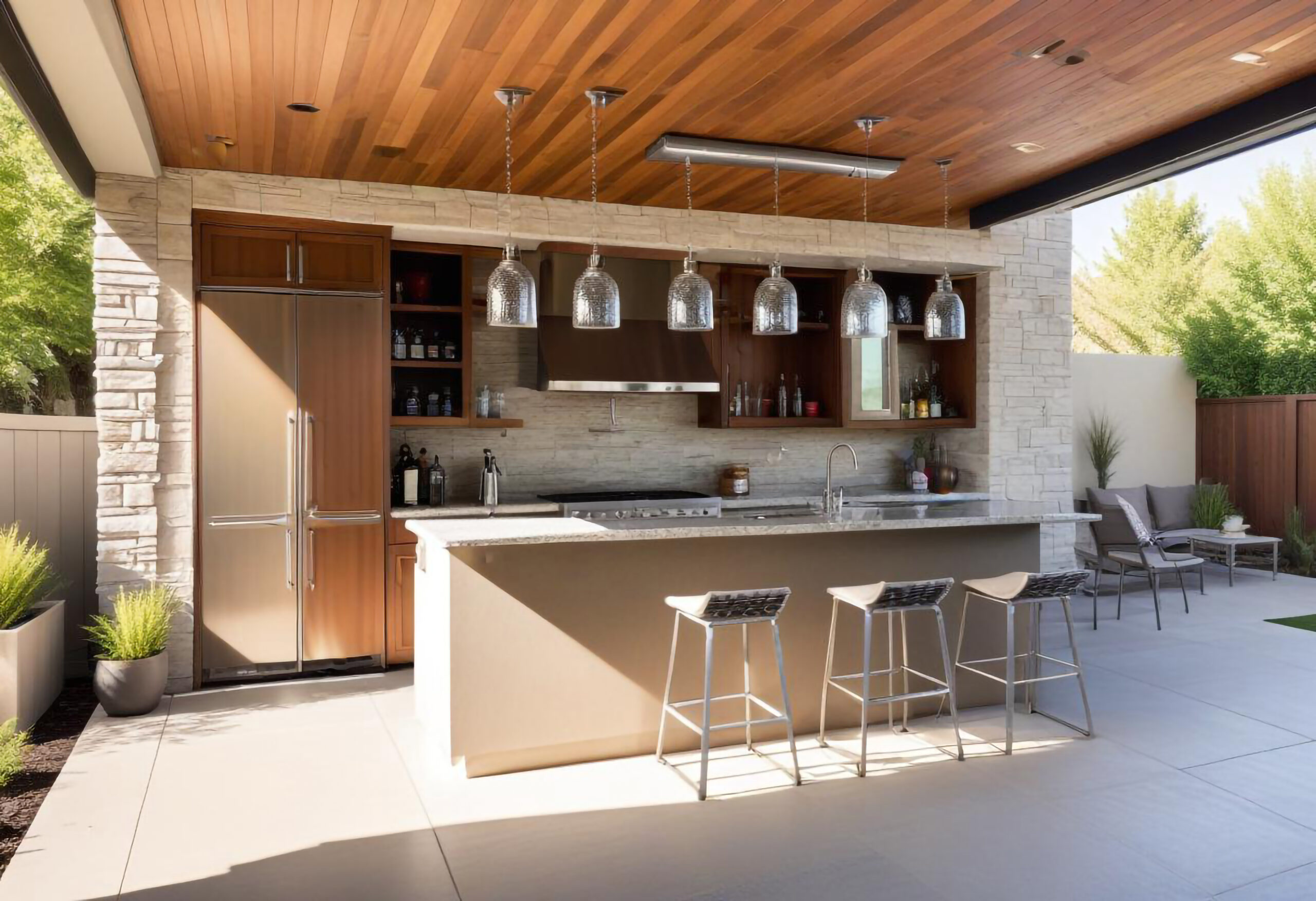
An outdoor kitchen transforms your backyard into an extension of your living space, making entertaining a breeze and outdoor cooking a true pleasure. At the heart of any functional outdoor kitchen are its cabinets, which must withstand the elements while providing essential storage and maintaining a cohesive aesthetic. Unlike indoor cabinetry, exterior kitchen cabinets demand materials and designs specifically engineered for durability against weather, temperature fluctuations, and moisture. LA Home Builders offers expert insights into creating weatherproof and stylish outdoor cabinet solutions that will elevate your al fresco culinary experience.
Best materials for outdoor kitchen cabinets
Choosing the right material is paramount for outdoor cabinets, as they face continuous exposure to sun, rain, temperature extremes, and humidity. Durability, resistance to warping, fading, and pests are key considerations.
- Stainless Steel:
- Pros: The gold standard for outdoor kitchens. Highly resistant to rust, corrosion, heat, and insects. Easy to clean and offers a sleek, modern, or professional look.
- Cons: Can be expensive. Requires regular cleaning to avoid smudges and fingerprints. Can get hot in direct sunlight. Look for 304-grade stainless steel for optimal outdoor performance, as lower grades may rust.
- Marine-Grade Polymer (HDPE – High-Density Polyethylene):
- Pros: Extremely durable, waterproof, UV-stabilized, and will not rot, delaminate, or crack. It’s impervious to insects and salt air, making it ideal for coastal environments. Comes in various colors and textures, often mimicking wood grain.
- Cons: Can be more expensive than some other options. Certain colors may fade over extreme prolonged sun exposure if not specifically UV-rated.
- Teak and Other Tropical Hardwoods:
- Pros: Naturally resistant to rot, decay, and insects due to high oil content. Teak, in particular, is renowned for its longevity and develops a beautiful silvery-gray patina over time if left untreated. Offers a classic, warm, and luxurious aesthetic.
- Cons: Requires regular oiling to maintain its original color and protect it from weathering (if the patina is not desired). Can be very expensive.
- Stucco or Masonry (Built-In):
- Pros: Extremely durable, fire-resistant, and weatherproof. Creates a permanent, integrated look that can match existing home architecture. Can incorporate various finishes, from natural stone veneer to tile. Often forms the base for built-in grills.
- Cons: Not “cabinets” in the traditional sense; they are built-in structures. Less flexible for future reconfigurations. Limited internal storage functionality unless custom doors are added.
- Powder-Coated Aluminum:
- Pros: Lightweight, rust-resistant, and very strong. Powder coating offers a durable, fade-resistant finish in a wide range of colors. A good choice for contemporary designs.
- Cons: Can dent more easily than stainless steel. Quality varies, so choose a reputable manufacturer.
Design styles that complement your outdoor space
Your outdoor kitchen cabinets should seamlessly blend with your home’s architectural style and the surrounding landscape, creating a cohesive aesthetic.
- Modern & Contemporary:
- Materials: Stainless steel, sleek powder-coated aluminum, or dark marine-grade polymer.
- Features: Clean lines, minimalist hardware, integrated handles, and a monochromatic or stark contrasting color palette.
- Traditional & Rustic:
- Materials: Natural woods (teak, ipe), stone veneer, or stucco.
- Features: Exposed wood grains, earthy tones, perhaps wrought iron accents, and a more classic, substantial feel.
- Coastal & Mediterranean:
- Materials: Light-colored marine-grade polymer, white powder-coated aluminum, or light-toned stucco.
- Features: Nautical or weathered finishes, bright whites, blues, and sandy tones. Emphasis on light and airy feel.
- Industrial:
- Materials: Raw or brushed stainless steel, dark metals, concrete-look finishes.
- Features: Exposed elements, utilitarian hardware, and a rugged, urban aesthetic.
- Transitional:
- Materials: A mix, such as stainless steel appliances paired with wood-look polymer or light stucco bases.
- Features: Blends classic elements with modern updates for a versatile, timeless look.
Tip: Consider the existing materials on your home’s exterior (stone, brick, siding color) when choosing cabinet finishes to ensure harmony.
Storage features to consider
Beyond aesthetics, the functionality of your outdoor kitchen cabinets hinges on intelligent storage solutions designed for convenience and durability.
- Drawer Systems:
- Weatherproof Drawers: Look for fully enclosed, gasket-sealed drawers to protect contents from moisture, insects, and dust.
- Dedicated Storage: Drawers for utensils, grilling tools, serving dishes, and even ice storage (insulated drawers).
- Pull-Out Shelves & Waste Bins:
- Easy Access: Maximize accessibility for pots, pans, and heavier items.
- Integrated Bins: Concealed trash and recycling bins keep the area tidy and deter pests.
- Appliance Housings:
- Integrated Grill Cabinets: Custom-designed cabinets to house your grill, side burner, or pizza oven. Ensure proper ventilation.
- Refrigerator/Wine Cooler Cabinets: Enclosed spaces for outdoor-rated refrigeration units.
- Pantry Storage:
- Deep Shelves: For storing bulkier items like charcoal bags or serving platters.
- Adjustable Shelving: Allows for customization based on your storage needs.
- Specialty Cabinets:
- Propane Tank Storage: Vented cabinets designed to safely store propane tanks, ensuring easy access and proper airflow.
- Sink Bases: Cabinets designed to house an outdoor sink and plumbing, often with an access panel.
- Door and Drawer Construction:
- Soft-Close Hinges/Slides: A mark of quality and convenience, providing smooth and quiet operation.
- Magnetic Catches: Help keep doors securely closed in windy conditions.
Finishes and color options
The finish and color of your outdoor cabinets significantly impact the overall look and feel of your outdoor kitchen.
- Stainless Steel:
- Finishes: Brushed (most common, hides fingerprints better), polished (shinier, more reflective), or sometimes powder-coated in dark tones.
- Color: Typically metallic silver-gray.
- Marine-Grade Polymer (HDPE):
- Finishes: Smooth matte, textured (mimicking wood grain or stone).
- Colors: Available in a wide palette from whites, grays, and blacks to various wood tones (cedar, walnut) and vibrant blues or greens.
- Wood:
- Finishes: Can be left natural to patina, stained to enhance grain, or sealed with a clear coat for protection.
- Colors: Natural wood tones, from light teak to dark ipe. Stains offer a range of browns, grays, and black.
- Powder-Coated Aluminum:
- Finishes: Smooth matte, textured, or metallic.
- Colors: Extremely versatile. Can be matched to almost any color, from crisp whites and modern grays to bold blues, greens, or even custom hues.
- Stucco/Masonry:
- Finishes: Smooth stucco, textured stucco, natural stone veneer, brick, or tile.
- Colors: Earth tones, grays, creams, or colors from natural stone, offering vast customization.
Considerations:
- UV Resistance: Ensure any painted or colored finish is specifically UV-stabilized to prevent fading and discoloration from prolonged sun exposure.
- Light vs. Dark: Lighter colors can make a space feel more open and might show less heat absorption in direct sun. Darker colors can create drama and sophistication.
- Harmonize: Select colors and finishes that complement your home’s exterior, existing patio materials, and surrounding landscape.
Maintenance tips for outdoor cabinetry
Even the most weatherproof cabinets require some maintenance to look their best and ensure longevity.
- Regular Cleaning:
- Stainless Steel: Wipe down regularly with a soft cloth and warm, soapy water or a specialized stainless steel cleaner. Always wipe with the grain to avoid streaks.
- Polymer/Aluminum: Simple soap and water are usually sufficient. For tougher grime, a soft brush can be used.
- Wood: Teak can be left to patina naturally, or you can clean and re-oil it annually to maintain its original warm tone. Other hardwoods may require specific sealants or finishes depending on the type.
- Stucco/Masonry: Can be power-washed annually (use low pressure) or scrubbed with a brush and mild detergent.
- Inspect for Damage: Periodically check for any signs of wear, loose hardware, or minor damage. Address small issues before they become major problems.
- Winterization (if applicable): In colder climates, consider covering your outdoor kitchen with a protective cover during the off-season. This helps shield cabinets from harsh winter elements like snow, ice, and extreme cold, extending their lifespan.
- Hardware Care: Clean and lubricate hinges and drawer slides as needed, especially if they are exposed to moisture frequently. Use rust-inhibiting lubricants for metal components.
- Pest Control: Ensure cabinets are sealed properly to prevent insects or rodents from taking up residence. Clean out any food debris promptly.
- Proper Ventilation: Ensure any built-in appliance cabinets have adequate ventilation to prevent heat buildup and moisture issues.
Investing in well-designed, weatherproof exterior kitchen cabinets is key to creating a truly functional and inviting outdoor living space. By choosing the right materials, considering thoughtful storage features, and maintaining them properly, your outdoor kitchen will provide years of enjoyment and stand up beautifully to the elements. For expert design and installation of durable outdoor kitchen solutions, trust the professionals at LA Home Builders to bring your vision to life.