
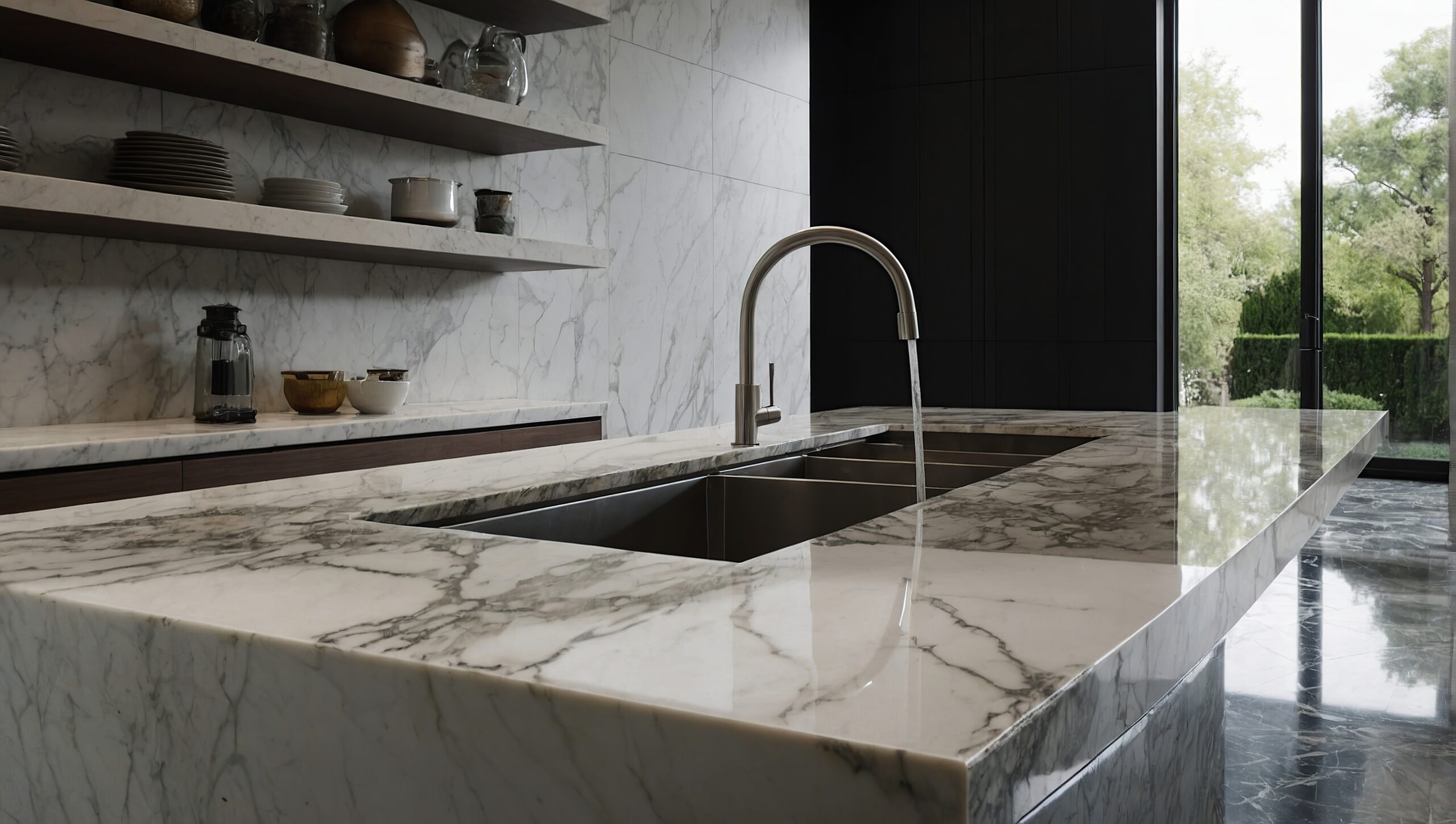
Quartz countertops have surged in popularity, becoming a top choice for kitchens and bathrooms due to their stunning aesthetics, exceptional durability, and low maintenance. Unlike natural stone, quartz is an engineered material, offering consistent patterns and a vast array of colors that can mimic the look of marble, granite, or even concrete. Understanding the investment required for quartz countertop installation is key to planning your renovation effectively. LA Home Builders breaks down the costs involved and what homeowners should expect when choosing this versatile material.
Average price per square foot
The cost of quartz countertops typically includes both the material and professional installation, quoted on a per-square-foot basis. The price can vary significantly based on the quartz’s quality, design complexity, and brand.
- Average Range (USA): Homeowners can generally expect to pay between $50 to $120 per square foot installed for quartz countertops.
- Budget-Friendly Quartz: For more standard colors, simpler patterns, and entry-level brands, prices can start around $50 to $70 per square foot installed.
- Mid-Range Quartz: This category offers a broader selection of colors, more intricate patterns, and established brands, typically costing $70 to $100 per square foot installed.
- High-End/Premium Quartz: For luxury brands, exotic designs that replicate rare natural stones, or highly specialized finishes, prices can reach $100 to $200+ per square foot installed.
For an average-sized kitchen (e.g., 30-40 square feet of counter space), the total cost of quartz countertops can range from approximately $1,500 to $8,000, with higher-end choices pushing the total well above that.
Cost factors
Several factors significantly influence the final price of your quartz countertop installation.
Brand and Style
- Brand Reputation: Well-known international brands like Caesarstone, Silestone, Cambria, and LG Hausys (Viatera) often carry a premium due to their reputation, extensive color palettes, and advanced manufacturing processes. Lesser-known or local brands might offer more budget-friendly options while still delivering quality.
- Design Complexity: Solid colors and simple speckled patterns are typically less expensive. Quartz designed to mimic rare natural stones like Calacatta or Carrara marble, or those with intricate veining and unique textures, will be at the higher end of the price spectrum due to the advanced technology required to create them.
- Finish Type: While polished is standard, honed (matte) or sueded (textured) finishes might be available for certain colors and can sometimes incur a slightly higher cost or be limited to specific lines.
Slab Size and Thickness
- Total Square Footage: Naturally, the larger the area you need to cover, the more slabs will be required, directly increasing material costs. Fabricators work to optimize cuts to minimize waste, but the layout of your kitchen can influence how many full slabs are needed.
- Thickness:
- 2 cm (approximately ¾ inch): This thinner slab is often more cost-effective per square foot for the material itself. It may require a plywood sub-base for support, which adds a minor cost for material and labor. It can offer a sleek, modern look.
- 3 cm (approximately 1 ¼ inch): This is the more common and generally preferred thickness for kitchen countertops due to its robust feel and substantial appearance. It typically does not require a sub-base, simplifying installation. While the material cost per square foot is higher than 2 cm, its inherent strength and aesthetic appeal often make it the standard choice.
Installation Complexity
- Layout and Seams: Complex kitchen layouts with many corners, angles, or unusually shaped islands will increase fabrication and installation costs. While quartz offers consistency, large installations may still require seams. The fewer and less visible the seams, the more skilled labor is required for precise cuts and installation.
- Edge Style:
- Standard Edges (Often Included): Eased (slightly rounded) or straight polished edges are typically included in the per-square-foot price or carry a minimal charge.
- Mid-Tier Edges (Adds $10-$20+ per linear foot): Options like half bullnose or beveled edges require more fabrication effort.
- Premium/Custom Edges (Adds $20-$40+ per linear foot): Intricate profiles such as Ogee or Dupont edges are labor-intensive to create and significantly increase the cost per linear foot.
- Cutouts: Each cutout for sinks, cooktops, or specialty appliances (e.g., downdraft vents) adds to the fabrication cost (typically $100-$400 per cutout for sinks/cooktops, less for faucet holes).
- Backsplash: A matching quartz backsplash is a beautiful addition but is priced separately, either by linear or square foot (often $15-$35+ per square foot).
- Accessibility: Difficult access to the kitchen or tight spaces for maneuvering heavy slabs can increase labor time and thus costs.
Quartz vs. Granite cost comparison
When comparing quartz to granite, their costs are quite competitive, and often overlap significantly.
- Quartz: Generally ranges from $50 to $120+ per square foot installed. Its consistency in pattern and color across slabs can be an advantage for large projects.
- Granite: Typically ranges from $40 to $150+ per square foot installed. Lower-grade granites can be more affordable than entry-level quartz, but exotic, rare granite slabs often surpass the cost of even premium quartz.
Key Difference: The cost of quartz is more influenced by the brand and design complexity, while granite’s cost is more driven by its rarity and natural variations. Both materials are considered premium options that add significant value to a home.
Long-term value and maintenance
Beyond the upfront installation cost, quartz countertops offer distinct advantages that contribute to their long-term value.
- Durability and Longevity: Quartz is extremely hard and highly resistant to scratches, chips, and impacts from everyday use. With proper care, quartz countertops can easily last 20 to 30 years or more.
- Low Maintenance: One of quartz’s biggest draws is its non-porous nature. Unlike natural stone (like granite), quartz never requires sealing. This eliminates a recurring maintenance task and associated costs.
- Stain Resistance: Its non-porous surface makes it highly resistant to stains from common kitchen spills like coffee, wine, and oils, as liquids cannot penetrate the surface. This means less worry about spills and easier cleanup.
- Hygiene: The non-porous surface also makes quartz highly hygienic, as it resists bacteria growth.
- Resale Value: Installing quartz countertops is a desirable upgrade for potential homebuyers, offering a strong return on investment by enhancing the kitchen or bathroom’s appeal and perceived value.
While the initial cost may be higher than some alternative materials, the minimal maintenance, extreme durability, and lasting beauty of quartz translate into significant long-term savings and increased home value.
Cost-saving tips
Even with a premium material like quartz, there are ways to manage and potentially reduce your overall project cost without compromising quality.
- Choose Common Designs/Brands: Opt for simpler patterns, solid colors, or mid-range brands. These are often more affordable due to higher production volumes.
- Select a Standard Thickness: A 3 cm slab is standard and robust, but if aesthetic allows, a 2 cm slab can sometimes offer material savings, especially for smaller projects or if a sub-base is not an issue.
- Stick to Standard Edge Profiles: Simple eased or straight edges are elegant, timeless, and significantly less expensive than intricate custom edges.
- Simplify Layout: Fewer seams, corners, and complex curves reduce fabrication and installation labor.
- Minimize Cutouts: Plan your sink and cooktop choices carefully. While necessary, excessive or custom cutouts add cost.
- Consider Remnants: For smaller projects like a bathroom vanity, laundry room countertop, or a bar top, ask fabricators about quartz remnants. These are leftover pieces from larger jobs sold at a discount.
- Get Multiple Quotes: Always obtain detailed estimates from at least three reputable quartz fabricators and installers. Ensure all quotes include the same scope of work (material, fabrication, installation, cutouts, edge profiles, removal of old counters, etc.) for accurate comparison.
- Bundle Projects: If you’re undertaking a larger renovation, or have other areas needing new countertops, consider doing them at the same time. Some contractors offer discounts for larger projects.
- Trust Professionals: While DIY may seem like a cost-saver, quartz slabs are extremely heavy, delicate to cut, and require specialized tools and expertise for a perfect fit and finish. Hiring experienced professionals like LA Home Builders prevents costly errors and ensures a beautiful, durable result.
Quartz countertops represent a smart investment in your home’s aesthetics and functionality. By understanding the cost factors and making informed choices, you can achieve a stunning and durable surface that will be enjoyed for years to come. For expert advice, precise fabrication, and professional installation of quartz countertops, partner with the trusted team at LA Home Builders.
Ready to upgrade your kitchen or bathroom with beautiful quartz countertops? Contact LA Home Builders today for a personalized consultation and a detailed estimate for your project!