


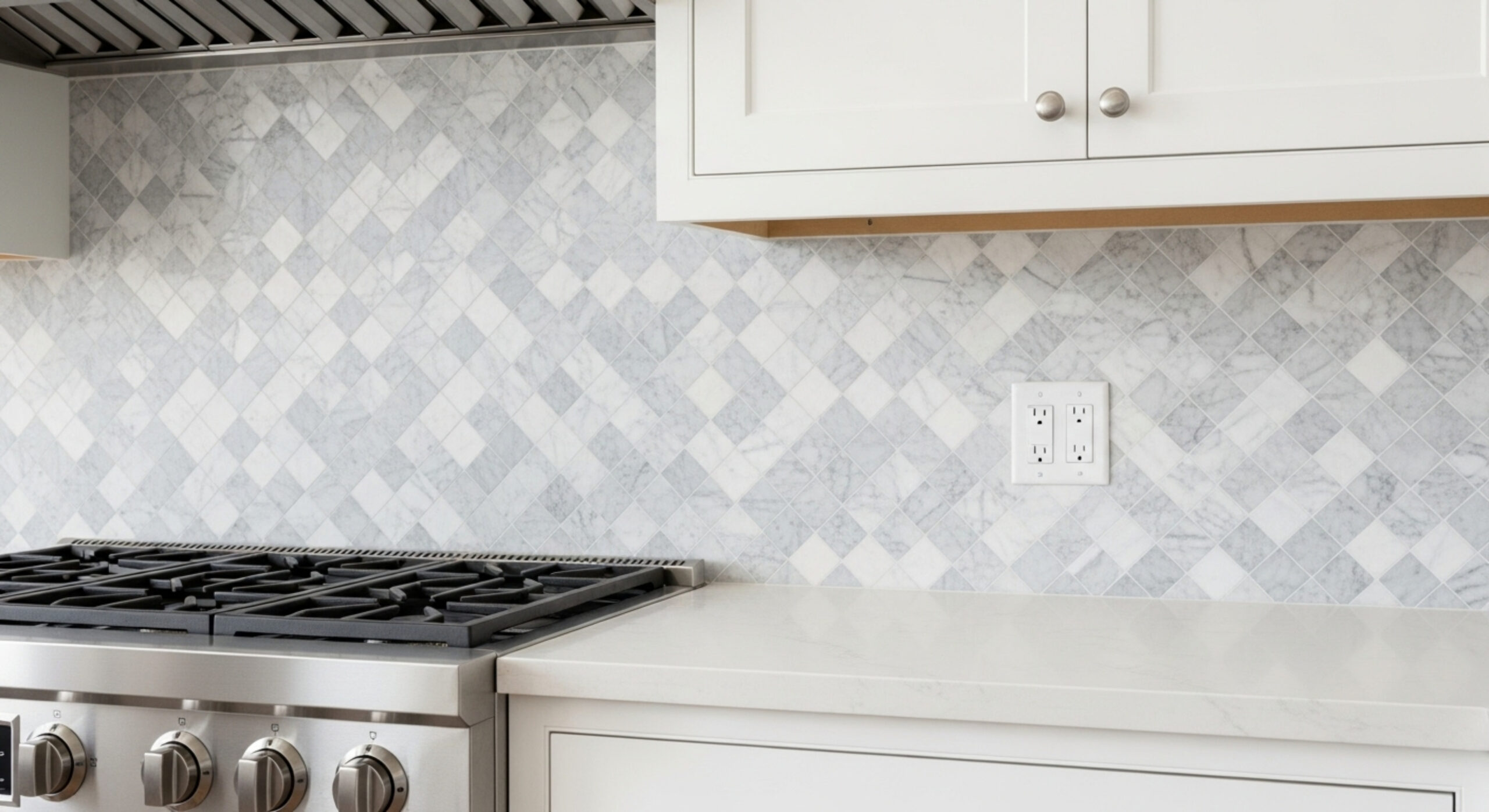
Installing a kitchen backsplash is a rewarding DIY project that can dramatically enhance the look of your kitchen while protecting your walls from splashes and spills. With careful planning and the right techniques, homeowners can achieve a professional-looking finish. This step-by-step guide will walk you through the process, from choosing materials to the final touches, ensuring a successful backsplash installation.
Choosing the right backsplash material
The material you choose will influence the installation process, durability, and aesthetic of your backsplash.
- Ceramic and Porcelain Tile:
- Pros: Most popular and versatile, wide range of colors, shapes, and sizes, durable, easy to clean, excellent moisture resistance. Relatively DIY-friendly.
- Considerations: Requires grout, which needs sealing (unless using epoxy grout).
- Glass Tile:
- Pros: Sleek, reflective, non-porous (very hygienic and easy to clean), modern aesthetic.
- Considerations: Can be more expensive, requires special cutting blades (diamond-tipped), and thin-set mortar specifically formulated for glass to prevent discoloration or “ghosting.”
- Natural Stone Tile (Marble, Travertine, Slate):
- Pros: Adds luxury and unique natural beauty.
- Considerations: Porous, requiring sealing before and after grouting, and periodically thereafter. More expensive, heavier, and can be challenging to cut.
- Peel-and-Stick Tiles:
- Pros: Easiest and fastest for DIY, highly budget-friendly, no mortar or grout needed.
- Considerations: Less durable and authentic-looking than traditional tile. Best for temporary solutions or low-moisture areas. Not recommended behind a stove.
- Metal Tiles (Stainless Steel, Copper):
- Pros: Industrial or modern look, durable, easy to clean (stainless steel).
- Considerations: Can show fingerprints, may require specific adhesives.
Tip: Always consider your kitchen’s overall style, your budget, and your DIY skill level when selecting a material.
Tools and materials you’ll need
Having all your tools and materials ready before you start will make the installation process smoother.
Tools:
- Measuring Tape and Pencil: For accurate measurements and marking.
- Level: Essential for ensuring straight lines and even tile placement.
- Stud Finder: To locate wall studs for ledger board installation (if needed).
- Tile Cutter (Manual or Wet Saw):
- Manual Snap Cutter: Good for straight cuts on ceramic and porcelain.
- Wet Saw: Best for precise cuts, intricate shapes, and cutting glass or natural stone. (Can often be rented).
- Notched Trowel: To apply thin-set mortar evenly. The notch size depends on the tile size (e.g., 1/4-inch square notch for most backsplash tiles).
- Rubber Grout Float: To press grout into joints.
- Large Sponge and Two Buckets: For cleaning excess grout.
- Tile Spacers: To ensure consistent grout lines.
- Caulk Gun: For applying caulk.
- Safety Glasses and Gloves: Essential for protection.
- Utility Knife: For cutting mesh backing on mosaic tiles or other materials.
- Drill with Mixing Paddle: For mixing thin-set mortar and grout.
Materials:
- Your Chosen Backsplash Tiles: Purchase at least 10-15% extra for cuts, mistakes, and future repairs.
- Thin-Set Mortar: Choose a type appropriate for your tile (e.g., unmodified for ceramic/porcelain, modified for glass/natural stone, or a specific rapid-setting formula).
- Grout: Sanded grout for wider joints (1/8 inch or more), unsanded for narrower joints (less than 1/8 inch). Choose a color that complements your tile.
- Grout Sealer: If using cement-based grout or natural stone tile.
- Caulk: Color-matched caulk for corners and where the backsplash meets the countertop.
- Painter’s Tape: For protecting surfaces and holding a ledger board.
- Drop Cloths or Plastic Sheeting: To protect countertops, cabinets, and flooring.
- Rubbing Alcohol or Degreaser: For cleaning the wall.
- Optional: Ledger Board (Straight Piece of Wood): For supporting the first row of tiles if starting above the countertop.
How to prep the wall surface
Proper wall preparation is crucial for a durable and long-lasting backsplash.
- Clear the Area: Remove everything from your countertops. Move small appliances, dishes, and anything that could get in the way.
- Protect Surfaces: Lay down drop cloths or plastic sheeting over your countertops, cabinets, and flooring. Use painter’s tape to secure the edges and protect cabinet faces.
- Remove Obstructions: Turn off power to outlets and light switches at the breaker. Remove outlet covers and switch plates. Loosen outlet boxes from the wall and pull them forward slightly so they will be flush with the new tile surface.
- Clean the Wall: Thoroughly clean the wall surface. Remove any grease, dirt, or debris. A degreaser or rubbing alcohol works well. Ensure the surface is completely dry.
- Repair and Smooth: Patch any holes or cracks in the drywall with joint compound. Sand smooth once dry. The surface should be as flat and smooth as possible for optimal tile adhesion.
- Measure and Mark:
- Locate the Center: Find the center point of your backsplash area (usually the center of the wall behind the stove or sink). Draw a vertical plumb line here.
- Establish a Level Line: Even if your countertop appears level, it might not be. Use a level to draw a perfectly horizontal line on the wall where the top of your first row of tiles will sit. This is especially important if your first row starts above the countertop (e.g., if you have a short existing backsplash or a decorative border).
- Install a Ledger Board (Optional but Recommended): If your first row of tiles starts significantly above the countertop (e.g., if you’re tiling above an existing 4-inch backsplash or if your countertop isn’t perfectly level), temporarily screw a straight piece of wood (a “ledger board”) to the wall along your level line. This provides a perfectly straight, temporary support for your first row of tiles, preventing them from sliding down. You’ll remove it after the mortar sets.
- Dry Layout (Optional but Recommended): Lay out a few rows of your tiles on your countertop or on the floor to visualize the pattern and how cuts will fall. This helps you plan your cuts and adjust your starting point to avoid awkward slivers of tile at corners or ends.
Tiling, grouting, and finishing steps
These are the core steps for installing your backsplash.
- Apply Thin-Set Mortar:
- Mix your thin-set mortar according to the manufacturer’s instructions. It should be the consistency of peanut butter.
- Using the flat side of your notched trowel, apply a thin layer of mortar to a small section of the wall (about 2×2 feet).
- Then, use the notched side of the trowel to comb the mortar, creating uniform ridges. Hold the trowel at a 45-degree angle.
- Set the Tiles:
- Start setting your tiles from your marked center line, working outwards. If using a ledger board, start from there.
- Press each tile firmly into the mortar with a slight twisting motion to ensure good adhesion.
- Insert tile spacers between each tile to maintain consistent grout lines.
- For mosaic tiles on mesh sheets, press the entire sheet into the mortar, then gently adjust individual tiles if needed to maintain spacing.
- Use your level frequently to check that rows are straight and tiles are plumb.
- Make Cuts:
- As you approach edges, corners, and outlets, measure and mark your tiles for cuts.
- Use your tile cutter or wet saw to make precise cuts. For outlet openings, mark the dimensions and use a wet saw or tile nippers for straight cuts, or a grinder for curved cuts.
- Always wear safety glasses when cutting tiles.
- Clean Excess Mortar: As you work, periodically scrape off any excess mortar that squeezes out from between tiles or on the tile faces. It’s much easier to clean when wet.
- Allow Mortar to Cure: Let the thin-set mortar dry completely according to the manufacturer’s instructions (usually 24-48 hours). Do not grout until the mortar is fully cured.
- Remove Spacers and Ledger Board: Once the mortar is set, carefully remove all tile spacers. If you used a ledger board, remove it and clean up any dried mortar below the first row.
- Apply Grout:
- Mix your grout according to instructions.
- Using a rubber grout float, spread the grout diagonally across the tile faces, pressing it firmly into the grout lines. Work in small sections.
- Angle the float at 45 degrees to force grout into the joints.
- Clean Excess Grout:
- After about 15-30 minutes (check manufacturer’s instructions for “hazing” time), the grout will start to haze.
- Use a damp (not wet) sponge to gently wipe off excess grout from the tile faces. Rinse your sponge frequently in one bucket of clean water, and wring it out thoroughly. Use a second bucket for dirty water to keep your rinse water clean longer.
- Be careful not to pull grout out of the joints.
- Allow the grout to dry for a few hours, then use a clean, dry cloth to buff away any remaining haze.
- Seal Grout (if applicable): If using cement-based grout or natural stone, apply a grout sealer according to product instructions after the grout has fully cured (usually 24-72 hours).
- Caulk Corners and Edges:
- Apply a thin bead of color-matched silicone caulk where the backsplash meets the countertop, at inside and outside corners, and around outlets.
- Smooth the caulk line with a wet finger or a caulk tool for a clean finish.
- Caulk allows for slight movement without cracking, unlike grout.
- Reinstall Outlet Covers: Once all is dry and cured, reinstall your outlet and switch covers.
Common mistakes and how to avoid them
Avoiding these pitfalls will ensure a smoother installation and a better final result.
- Not Prepping the Wall Properly:
- Mistake: Tiling over dirty, uneven, or damaged walls.
- Avoid: Thoroughly clean, patch, and sand the wall. Ensure it’s flat and dry.
- Ignoring the Level Line:
- Mistake: Assuming the countertop is level and starting your first row directly on it. This can lead to crooked rows that become more noticeable as you go up.
- Avoid: Always use a level to draw a perfectly horizontal starting line. If your countertop isn’t level, use a ledger board to support your first row, ensuring it’s perfectly straight. You can then cut the bottom row to fit the countertop’s unevenness after the main tile has set.
- Using the Wrong Mortar or Grout:
- Mistake: Using standard thin-set for glass tile (can cause discoloration) or sanded grout for very thin grout lines (can scratch delicate tiles).
- Avoid: Read the tile manufacturer’s recommendations for thin-set and grout. Match grout type (sanded/unsanded) to your grout line width.
- Applying Too Much Mortar at Once:
- Mistake: Spreading mortar over too large an area, causing it to dry before you can set tiles.
- Avoid: Work in small sections (2×2 feet at a time) that you can comfortably tile within 10-15 minutes.
- Not Using Spacers Consistently:
- Mistake: Uneven grout lines, leading to an unprofessional look.
- Avoid: Use tile spacers consistently between every tile.
- Not Cleaning Excess Mortar/Grout Promptly:
- Mistake: Letting mortar or grout dry completely on tile faces, making it extremely difficult to remove.
- Avoid: Wipe off excess mortar as you go. Clean grout haze within the recommended time frame.
- Grouting Too Soon:
- Mistake: Grouting before the thin-set mortar has fully cured, which can lead to cracks or discoloration in the grout.
- Avoid: Always wait the recommended curing time for the thin-set (usually 24-48 hours) before grouting.
- Not Sealing Grout/Natural Stone:
- Mistake: Leaving grout or natural stone unsealed, making it susceptible to stains and moisture.
- Avoid: Apply a high-quality grout sealer (and stone sealer if applicable) after the grout has cured. Re-seal periodically as recommended.
- Using Grout in Corners:
- Mistake: Grout is rigid and will crack in corners or where the backsplash meets the countertop due to slight structural movement.
- Avoid: Always use a flexible silicone caulk in these areas. Color-matched caulk is available.
By carefully following these steps and avoiding common errors, you can successfully install a beautiful and durable kitchen backsplash that enhances your home for years to come.
Ready to upgrade your kitchen with a stunning new backsplash? LA Home Builders specializes in comprehensive kitchen remodels, offering expert guidance and professional installation for all types of backsplashes. Contact us today for a free consultation and let’s bring your kitchen vision to life!