


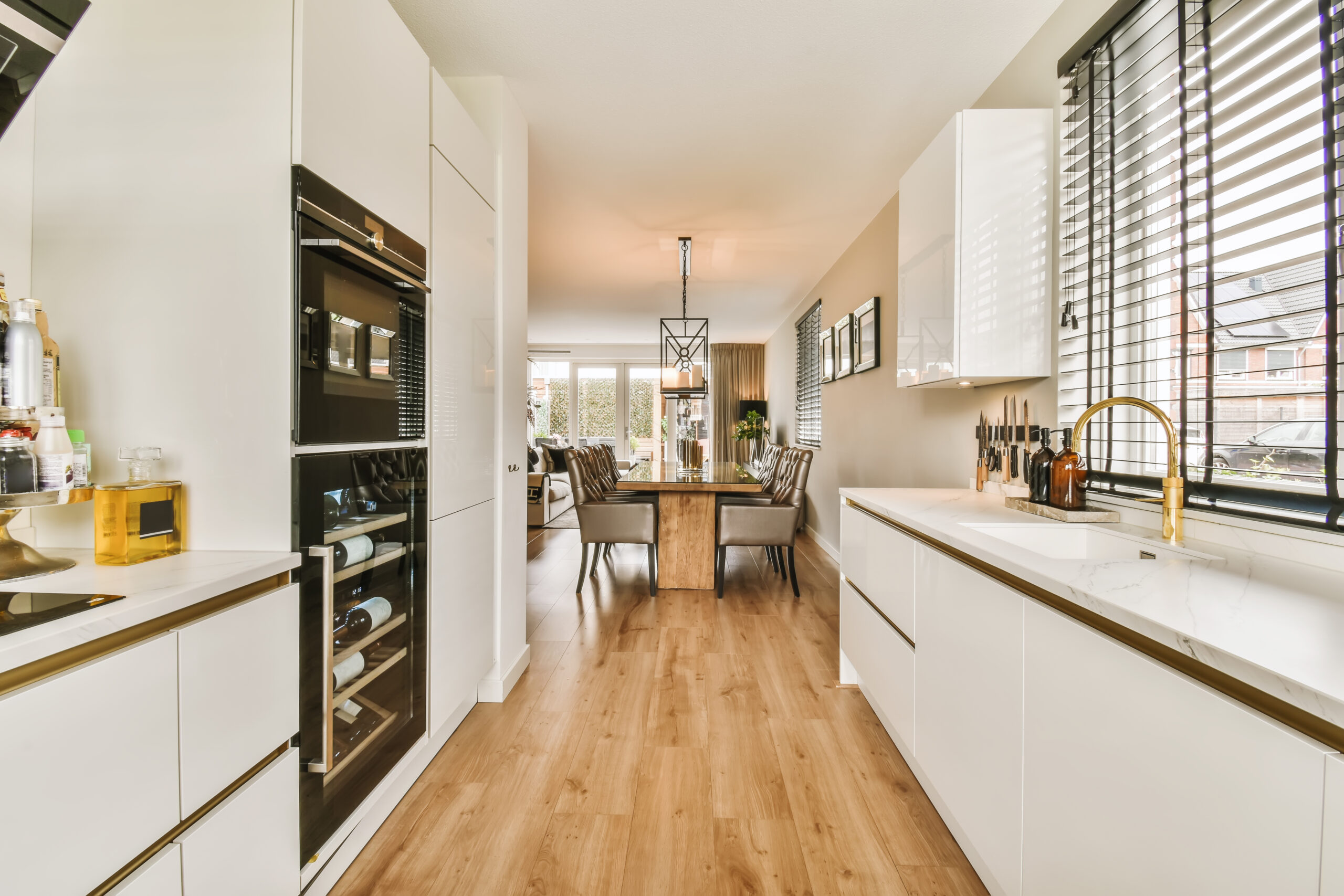
Wood flooring brings undeniable warmth, beauty, and a timeless appeal to any space, and the kitchen is no exception. For many homeowners, the idea of a continuous flow of wood from open-concept living areas into the kitchen is highly desirable. However, the kitchen’s unique environment – prone to spills, heavy foot traffic, and potential humidity fluctuations – raises important questions about the practicality and longevity of wood floors. This guide will explore the pros and cons of wood flooring in kitchens, compare solid and engineered options, discuss maintenance, protective finishes, and offer design tips to help you decide if wood is the right choice for your culinary space.
Pros and cons of wood flooring in kitchens
Deciding on wood flooring for your kitchen involves weighing its aesthetic benefits against its practical considerations.
Pros:
- Timeless Aesthetic Appeal: Wood floors offer a classic, warm, and inviting look that can complement a wide range of kitchen styles, from traditional to modern. They add natural beauty and character that other materials often struggle to replicate.
- Seamless Transition: In open-concept homes, using wood flooring throughout the kitchen and adjoining living areas creates a cohesive and expansive feel, visually unifying the space.
- Comfort Underfoot: Compared to harder surfaces like tile or concrete, wood is more forgiving and comfortable to stand on for long periods, which is a significant advantage in a kitchen where you spend a lot of time on your feet. It also offers natural insulation, making the room feel warmer.
- Adds Home Value: Hardwood flooring is generally considered a premium feature that can increase a home’s resale value and appeal to potential buyers.
- Can Be Refinished: Solid hardwood floors can be sanded down and refinished multiple times over their lifespan (decades, even a century or more), allowing you to restore their original beauty or change their stain color without full replacement. High-quality engineered wood with a thick wear layer can also be refinished a few times.
Cons:
- Susceptibility to Moisture Damage: This is the primary concern for wood in kitchens. Standing water from spills, leaks from dishwashers or sinks, or high humidity can cause wood to swell, warp, cup, buckle, or even rot.
- Prone to Scratches and Dents: Kitchens are high-traffic areas where dropped pots, dragged chairs, or pet claws can easily scratch or dent wood surfaces. Softer wood species are more vulnerable.
- Maintenance Requirements: Wood floors require diligent and specific cleaning routines. Spills must be wiped up immediately, and excessive water or harsh cleaners should be avoided.
- Cost: Quality wood flooring, especially solid hardwood, can be a significant upfront investment compared to some other kitchen flooring options. Installation costs can also be higher.
- Noise: While softer than tile, wood floors can sometimes be noisy underfoot, especially if the subfloor isn’t perfectly flat or if the installation isn’t secure.
Solid hardwood vs. Engineered wood
When choosing wood for your kitchen, the distinction between solid and engineered hardwood is crucial, particularly concerning moisture resistance.
- Solid Hardwood:
- Composition: Made from a single, solid piece of wood (typically 3/4-inch thick).
- Pros: Unmatched longevity (can last 100+ years), can be sanded and refinished many times to remove wear and deep scratches, offers a truly authentic wood feel.
- Cons: Highly susceptible to moisture and humidity fluctuations, which can cause significant expansion, contraction, cupping, or buckling. Not recommended for basements or over concrete slabs. Generally more expensive for material and installation.
- Best For Kitchens? While beautiful, solid hardwood is generally less ideal for kitchens due to its vulnerability to moisture. If chosen, extreme vigilance with spills and strict humidity control are necessary.
- Engineered Wood:
- Composition: Features a top veneer layer of real hardwood (the “wear layer”) glued over multiple layers of high-density fiberboard (HDF) or plywood. The cross-ply construction provides enhanced stability.
- Pros: Superior resistance to moisture and humidity changes compared to solid hardwood, making it a much better choice for kitchens and basements. More dimensionally stable, less prone to warping or cupping. Available in wider planks and a greater variety of finishes. Can often be installed as a “floating floor,” which can be more DIY-friendly.
- Cons: Lifespan is typically 20-40 years (depending on wear layer thickness), as it can only be refinished a few times (or not at all if the veneer is very thin). A deep gouge might go through the veneer, exposing the core.
- Best For Kitchens? Generally the preferred wood option for kitchens. Its improved stability against moisture makes it a more practical and durable choice for this environment while still offering the authentic look of real wood.
Moisture and maintenance considerations
Proper maintenance is paramount for extending the life and beauty of wood floors in a kitchen environment.
- Moisture Control:
- Immediate Spill Cleanup: This is the single most important rule. Any liquid spills (water, oil, food) must be wiped up immediately to prevent absorption and damage.
- Humidity Regulation: Wood is hygroscopic, meaning it absorbs and releases moisture. Maintaining consistent indoor humidity levels (ideally between 35% and 55% relative humidity) using humidifiers in dry seasons and dehumidifiers/AC in humid seasons will minimize expansion and contraction, preventing gaps or buckling.
- Protective Mats: Place absorbent mats or rugs in high-risk areas, such as in front of the sink, dishwasher, and refrigerator, to catch spills and drips. Ensure mats have a non-slip backing and are breathable (avoid rubber or plastic backings that can trap moisture).
- Appliance Leaks: Be vigilant for leaks from dishwashers, refrigerators with ice makers, or sinks. Regular checks can prevent extensive damage.
- Cleaning and Care:
- Regular Sweeping/Vacuuming: Daily or frequent sweeping with a soft-bristle broom or vacuuming with a hard floor attachment is essential to remove dirt, grit, and debris that can scratch the finish.
- Damp Mopping (Not Wet): Use a slightly damp (well-wrung) mop with a wood-specific, pH-neutral cleaner. Never use excessive water, steam mops, or harsh chemicals (like bleach, ammonia-based cleaners, or oil soaps), as these can strip the finish, dull the shine, or damage the wood.
- Furniture Pads: Attach felt pads to the legs of all kitchen chairs and tables to prevent scratches and dents when furniture is moved.
- Pet Care: Keep pet nails trimmed to minimize scratches. Place pet water bowls on a waterproof mat or in an area with tile flooring.
- Avoid Abrasives: Do not use abrasive scrubbers or steel wool, which can damage the finish.
Protective finishes that extend lifespan
The finish applied to your wood floor acts as its primary protective barrier against moisture, scratches, and wear.
- Polyurethane (Oil-Based):
- Characteristics: Traditional, durable, creates a thick, protective layer on the wood surface. Offers an amber tone that deepens over time.
- Pros: Excellent protection against scratches and wear, long-lasting (10+ years before refinishing), good water resistance.
- Cons: Strong odors during application, longer drying times, can yellow over time.
- Polyurethane (Water-Based):
- Characteristics: Modern alternative, clear finish that maintains the wood’s natural color.
- Pros: Dries faster, lower odor, lower VOCs. Advances in technology have significantly improved its durability, offering comparable scratch and wear resistance to oil-based polyurethanes, often without yellowing.
- Cons: Historically less durable than oil-based, but this gap is closing.
- Hardwax Oils:
- Characteristics: Penetrating finish that soaks into the wood rather than forming a layer on top. Enhances the natural texture and grain. Offers a matte, low-luster appearance.
- Pros: Natural look and feel, allows for easy spot repairs (no need to refinish the entire floor for minor damage), eco-friendly options available.
- Cons: Less water-resistant than polyurethane finishes (requires more immediate spill cleanup), may require more frequent reapplication in high-traffic areas.
- Acid-Cured (Swedish) Finishes:
- Characteristics: A premium, two-component finish known for exceptional hardness.
- Pros: Extremely durable, highly resistant to moisture and chemicals, often considered the toughest finish available.
- Cons: Strong fumes (requires professional application and ventilation), can be more expensive.
- Best For: High-traffic areas like kitchens where maximum protection is desired.
Lifespan & Refinishing: The lifespan of a wood floor in a kitchen depends heavily on the chosen wood species, the quality of the finish, and consistent maintenance. Solid hardwood can be refinished multiple times (every 10-20 years depending on wear), effectively extending its life for generations. Engineered wood with a thick wear layer can also be refinished, typically 1-3 times. Regular recoating of the finish (often every 3-5 years) can help maintain protection and prolong the need for full refinishing.
Design tips for blending wood floors with cabinets
Achieving a harmonious look between your wood floors and kitchen cabinets is key to a cohesive and stylish kitchen design.
- Create Intentional Contrast:
- Light Floors, Dark Cabinets: A popular and timeless combination. Light wood floors (like white oak, maple, or ash) can brighten the space and make it feel more expansive, while dark cabinets (e.g., walnut, cherry, or painted dark colors) provide a grounding contrast and visual depth.
- Dark Floors, Light Cabinets: Dark wood floors (like ebony-stained oak or walnut) create a rich, sophisticated base, allowing light-colored cabinets (white, off-white, light gray) to pop and keep the kitchen feeling airy.
- Vary Tones within the Same Color Family:
- If you prefer a more unified look, choose wood tones that are in the same color family (e.g., all warm tones or all cool tones) but vary in shade. For instance, a medium-toned oak floor with slightly lighter or darker oak cabinets. This creates subtle depth without feeling mismatched.
- Consider Undertones:
- Pay attention to the undertones of your wood. Woods can have warm (red, orange, yellow), cool (gray, blue), or neutral undertones. Try to coordinate these undertones between your floor and cabinets for a cohesive feel. Warm wood floors pair well with warm-toned cabinets or paint colors, and vice-versa for cool tones.
- Mix Finishes and Textures:
- Even if the colors are similar, varying the finish (e.g., a matte floor with a satin cabinet finish) or texture (e.g., wire-brushed floor with smooth cabinets) can add visual interest and prevent the space from looking flat.
- Introduce a Transitional Element:
- If your wood floor and cabinets have very different tones, use a transitional element like a neutral-colored backsplash (white, light gray, greige) or a contrasting kitchen island in a different material or color to bridge the gap and tie the elements together.
- Utilize Samples and Lighting:
- Always obtain large samples of your chosen wood flooring and cabinet finishes. View them together in your kitchen under different lighting conditions (natural daylight, evening, artificial lighting) to see how the colors and tones interact. Lighting can significantly alter how wood appears.
- Consider Wood Species and Grain:
- Different wood species have distinct grain patterns. For a cohesive look, choose species with complementary grain patterns. For example, a highly figured wood floor might be balanced by simpler cabinet wood.
While wood floors in kitchens require careful consideration and diligent maintenance, their unparalleled beauty, comfort, and ability to enhance home value make them a desirable choice for many homeowners. With the right selection and care, a wood floor can be a stunning and long-lasting feature in your kitchen.
Ready to explore wood flooring options for your kitchen remodel? LA Home Builders specializes in crafting exquisite and functional kitchens, offering expert guidance on selecting and installing the perfect flooring to match your style and needs. Contact us today for a free consultation and let’s design the kitchen of your dreams!