


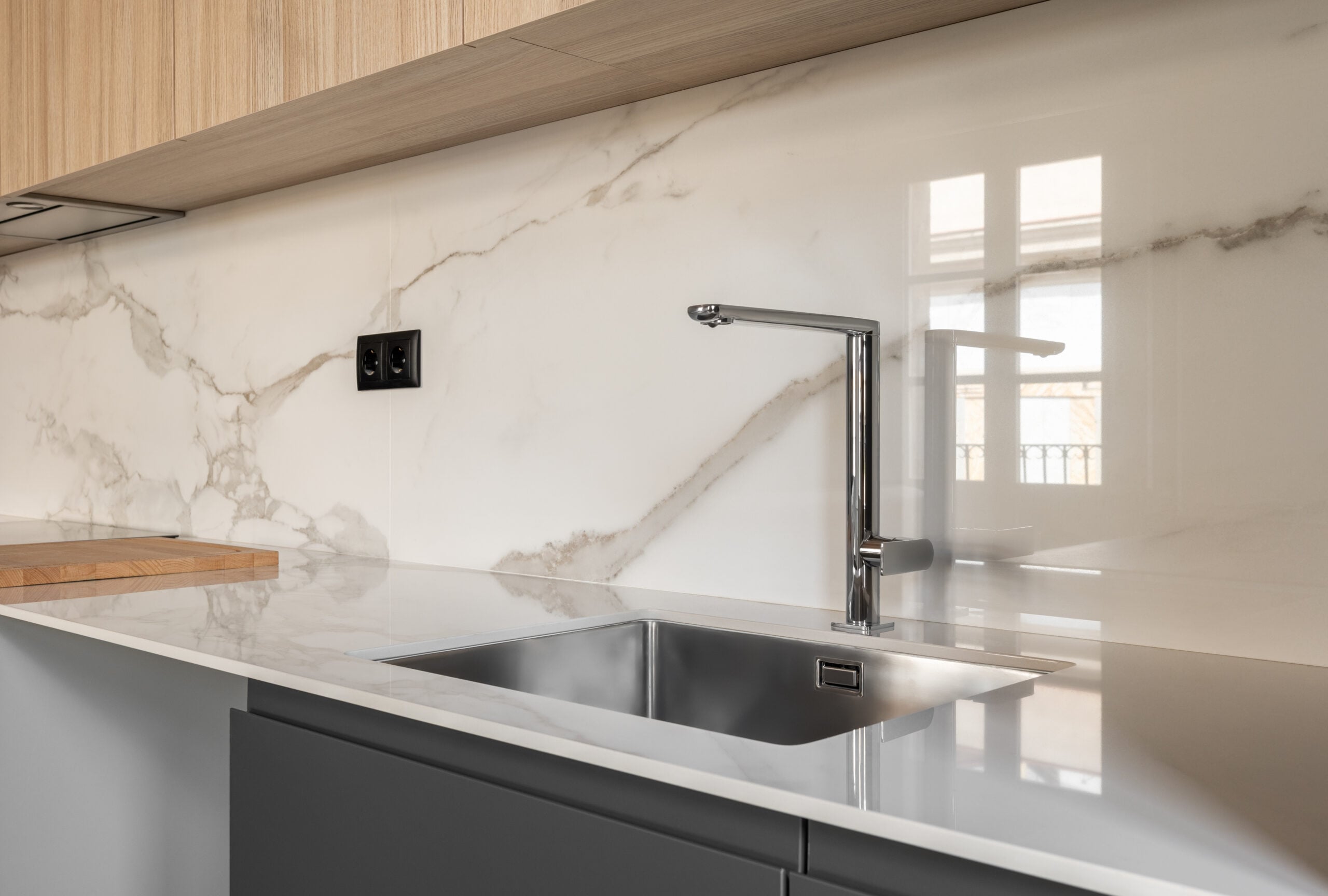
The integrated kitchen sink and countertop represent a cutting-edge approach to kitchen design, prioritizing sleek lines, seamless transitions, and enhanced functionality. This modern solution creates a continuous surface where the sink is an integral part of the countertop, eliminating visible seams and crevices. This guide will delve into the specifics of integrated sinks, explore the best materials for their construction, highlight their design benefits, discuss essential cleaning and maintenance, and cover important cost and installation considerations.
What are integrated sinks?
An integrated sink, often referred to as a seamless or molded sink, is a kitchen sink that is fabricated from the same material as the countertop. Unlike traditional sinks that are dropped into an opening or mounted underneath, an integrated sink is designed to be a continuous extension of the counter surface.
This unique construction means there are no visible joints, lips, or gaps where the sink meets the countertop. The material flows smoothly from the flat counter surface directly into the basin, creating a remarkably clean and uninterrupted aesthetic. This seamless design is achieved through specialized fabrication processes, such as thermoforming for solid surface materials or precise bonding and polishing for engineered stones like quartz.
The core idea behind integrated sinks is to create a highly hygienic and visually streamlined workspace that is easy to clean and maintain, while also offering a sophisticated, contemporary look.
Best materials: Quartz, solid surface, stainless steel
The choice of material is paramount for integrated sinks, as it dictates their durability, appearance, and performance.
- Quartz (Engineered Stone):
- Description: Composed of approximately 90-95% ground quartz crystals mixed with resins, polymers, and pigments.
- Pros: Extremely hard and durable, making it highly resistant to scratches, chips, and stains. Non-porous, which means it’s exceptionally hygienic and easy to clean, as it doesn’t harbor bacteria or absorb liquids. Available in a vast array of colors and patterns, including realistic mimics of natural stone, concrete, and even wood. Excellent for achieving a seamless look with a consistent pattern.
- Cons: Can be more expensive than some other options. While largely heat-resistant, extreme heat can potentially damage the resin binders, so trivets are still recommended for very hot items.
- Best For: Homeowners seeking a highly durable, low-maintenance, and aesthetically versatile integrated sink that offers a consistent look and can mimic the beauty of natural stone without its upkeep.
- Solid Surface (e.g., Corian, LG HI-MACS):
- Description: A non-porous, homogeneous material made from acrylic or polyester resins and natural minerals.
- Pros: This is the quintessential material for truly seamless integrated sinks because it can be thermoformed (heated and molded) and seamlessly bonded, creating virtually invisible seams. It is incredibly hygienic, non-porous, and very easy to clean. Minor scratches or damage can often be sanded out and repaired, restoring the surface. It feels warm to the touch.
- Cons: Not as hard as quartz, so it can scratch more easily, though repairs are often straightforward. Less heat-resistant than quartz or stainless steel; direct contact with very hot pots can cause scorching or discoloration.
- Best For: Achieving the most truly seamless and fluid designs, especially for custom shapes and configurations, and for those who prioritize repairability and a softer feel.
- Stainless Steel (Integrated/Welded):
- Description: While most stainless steel sinks are separate units, it’s possible to achieve an integrated look by custom-fabricating a stainless steel countertop with a sink welded directly into it.
- Pros: Extremely durable, highly heat-resistant, and exceptionally hygienic. Offers a sleek, industrial, or professional kitchen aesthetic. Very easy to clean.
- Cons: Can show fingerprints and water spots easily. Can be noisy. Custom welding is a highly specialized and expensive process, making this a premium option.
- Best For: Commercial-style kitchens, industrial designs, or those prioritizing ultimate durability, heat resistance, and a minimalist metal finish.
Design benefits and minimalist appeal
The seamless design of integrated sinks offers significant aesthetic and practical advantages that contribute to a modern, minimalist kitchen.
- Sleek and Modern Aesthetic: The primary draw of integrated sinks is their clean, contemporary appearance. The continuous flow from the countertop into the basin creates an uninterrupted visual line, which is a hallmark of modern and minimalist design. This contributes to a sophisticated and high-end look.
- Enhanced Hygiene: Without seams, grout lines, or lips where the sink meets the counter, there are no crevices for food debris, dirt, mold, or mildew to accumulate. This makes integrated sinks incredibly hygienic and significantly easier to keep clean, promoting a healthier kitchen environment.
- Visual Expansion: By eliminating the visual break of a sink rim, the countertop appears larger and more expansive, contributing to an open and uncluttered feel in the kitchen. This is particularly beneficial in smaller kitchens.
- Customization and Flexibility: Because they are often custom-fabricated, integrated sinks offer greater flexibility in terms of size, shape, and basin configuration. You can design a single large basin, a double sink, or even unique custom shapes to perfectly fit your kitchen’s layout and your specific needs.
- Streamlined Workflow: The smooth transition from counter to sink means you can easily wipe crumbs and liquids directly into the basin without obstruction, simplifying cleanup and enhancing workflow.
- Cohesive Design: When the sink matches the countertop material, it creates a unified and harmonious look that ties the entire kitchen together, especially in open-concept living spaces.
Cleaning, maintenance, and durability
Integrated sinks are generally designed for ease of cleaning and high durability, but specific care depends on the material.
- Cleaning:
- Daily Wipe-Down: For all materials, a simple daily wipe-down with a soft cloth, warm water, and mild dish soap is usually sufficient.
- Avoid Abrasives: Do not use abrasive cleaners, scouring pads, or harsh chemicals (e.g., oven cleaner, drain cleaner, strong acids/alkalines) on quartz or solid surface, as these can damage the finish. For stainless steel, use non-abrasive cloths and specialized stainless steel cleaners for best results.
- Prompt Spill Cleanup: Although highly stain-resistant, wipe up spills like wine, coffee, or highly pigmented foods promptly to prevent any potential discoloration over time, especially on lighter surfaces.
- Maintenance:
- No Sealing Required (for Quartz and Solid Surface): Unlike natural stone, quartz and solid surface are non-porous and do not require sealing, which simplifies maintenance significantly.
- Heat Protection: Always use trivets or hot pads under very hot pots, pans, and slow cookers, especially for solid surface sinks, to prevent scorching or discoloration. While quartz is more heat-resistant, it’s still a good practice.
- Minor Scratch Repair (Solid Surface): A key advantage of solid surface is that minor scratches and scuffs can often be buffed out with a fine abrasive pad, restoring the surface.
- Stainless Steel Maintenance: Wipe dry after use to prevent water spots. Use stainless steel polish periodically to maintain shine and remove fingerprints.
- Durability:
- High Resistance: Quartz and stainless steel offer excellent resistance to impacts, scratches, and general wear and tear, making them highly durable for a busy kitchen environment.
- Longevity: With proper care, integrated sinks made from these materials can last for many decades, maintaining their aesthetic appeal and functionality.
- Repair Challenges (for some materials): While durable, a severe crack or chip in a quartz or natural stone integrated sink can be more challenging and costly to repair than replacing a separate sink. Solid surface, however, is generally more easily repaired.
Cost and installation considerations
Integrated sinks, while offering significant benefits, come with specific cost and installation considerations.
- Higher Cost:
- Integrated sinks are generally more expensive than traditional drop-in or undermount sinks. This higher cost is due to several factors:
- Material Cost: Premium materials like quartz, solid surface, or custom-welded stainless steel are inherently more expensive.
- Specialized Fabrication: The seamless nature requires specialized machinery and skilled craftsmanship to mold, bond, and finish the sink and countertop as a single unit.
- Labor: The installation process is more intricate and time-consuming, requiring experienced professionals.
- Integrated sinks are generally more expensive than traditional drop-in or undermount sinks. This higher cost is due to several factors:
- Professional Installation is Essential:
- Integrated sinks are not a DIY project. Their fabrication and installation require specialized tools, techniques, and expertise.
- Precise Measurements: Accurate measurements are critical, as the sink is custom-made to fit the countertop.
- Complex Fabrication: The process involves precise cutting, shaping, and bonding of the material to create the seamless transition.
- Heavy Materials: Stone and quartz slabs are extremely heavy and require professional handling and installation to prevent damage and ensure safety.
- Planning for Plumbing:
- If you’re installing a new integrated sink, ensure your plumbing rough-ins (water supply and drain lines) are correctly positioned to accommodate the new sink’s dimensions and any integrated appliances (like a garbage disposal). This should be coordinated with your fabricator and plumber.
- Long-Term Investment:
- Despite the higher initial cost, an integrated sink is a long-term investment that can significantly enhance your kitchen’s aesthetic, functionality, and potentially its resale value. Its durability and ease of maintenance can offset some of the upfront expenses over time.
By understanding these aspects, you can make an informed decision about whether an integrated kitchen sink and countertop are the right choice for your home, balancing your design aspirations with practical considerations.
Considering a sleek, seamless integrated sink for your kitchen remodel? LA Home Builders specializes in crafting custom kitchens with modern designs, including expert fabrication and installation of integrated sinks and countertops. Our experienced team ensures quality craftsmanship and a flawless finish. Contact us today for a free consultation and let’s create the kitchen of your dreams!