


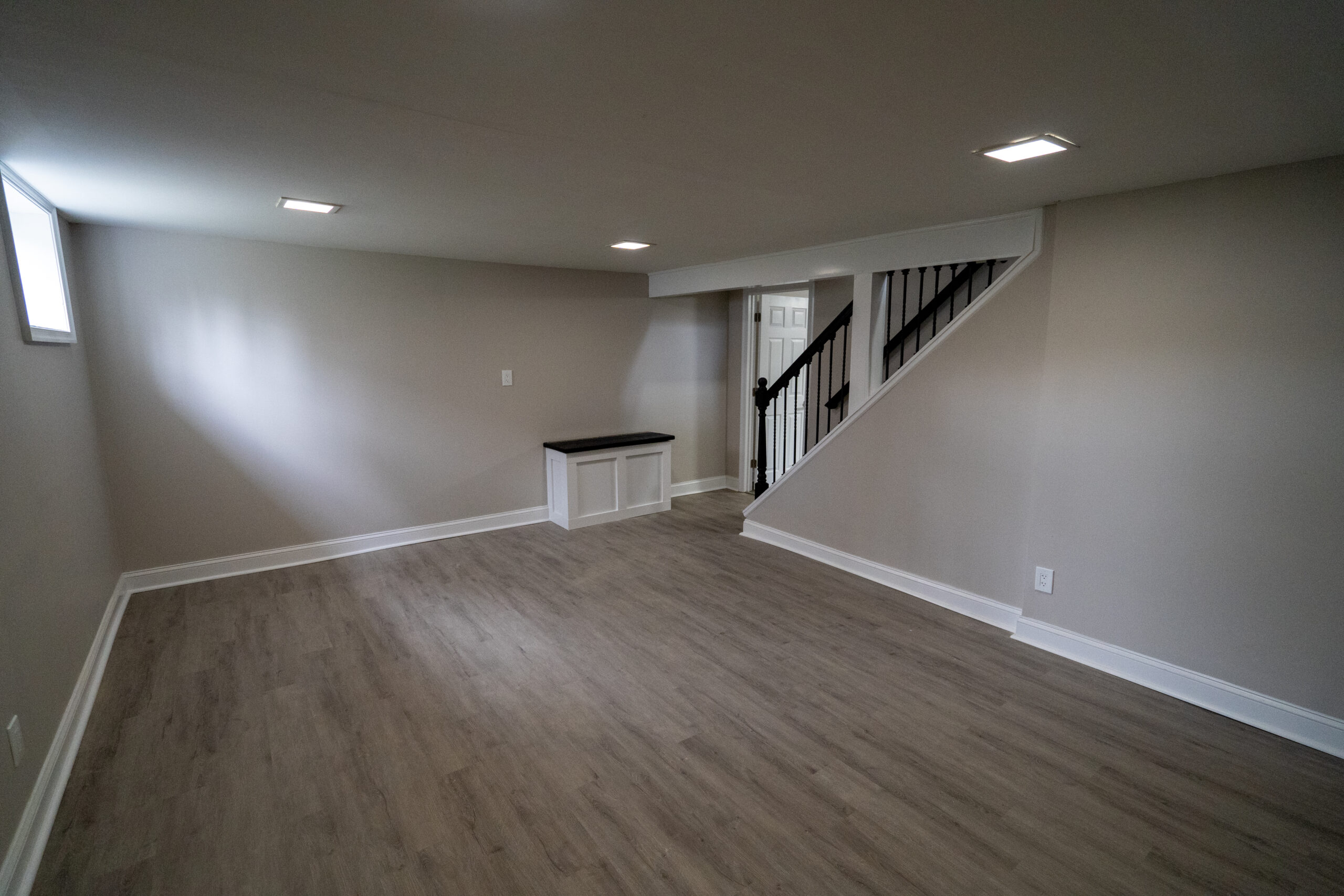
Transforming an unfinished basement into a functional and inviting living space is one of the smartest investments a homeowner can make. It expands your usable square footage without the need for a costly addition, adding significant value and versatility to your home. Understanding the financial commitment involved is crucial for a successful project. At LA Home Builders, we’re here to help you navigate the costs and considerations of a basement remodel, especially for homeowners in Connecticut.
Average basement remodel cost in Connecticut
The cost of a basement remodel in Connecticut can vary significantly based on the size of the space, the complexity of the project, and the quality of finishes chosen.
- Average Total Cost Range: Homeowners in Connecticut typically spend between $15,000 and $75,000 to finish or remodel a basement.
- Cost Per Square Foot: You can expect a general range of $30 to $75 per square foot for finishing a basement in Connecticut. For high-end finishes and extensive modifications, costs can exceed $100 per square foot.
- Basic Refinishing: For a simpler project involving framing, drywall, basic flooring, and paint in an open layout, costs might be on the lower end, from $15,000 to $30,000.
- Mid-Range Remodel: A more common project, often including a new bathroom or bedroom, average quality finishes, and some new electrical/plumbing, will typically fall between $30,000 and $50,000.
- High-End Remodel: A luxurious transformation with premium materials, multiple rooms (e.g., a full kitchen/wet bar, bathroom, home theater), and significant structural or plumbing/electrical changes could reach $50,000 to $75,000+.
For example, a 500-square-foot basement might cost $15,000 – $25,000 for an open-plan finish, while a 1,000-square-foot basement with multiple rooms could be $40,000 – $50,000.
Key cost factors
Several factors play a pivotal role in determining the final price tag of your basement remodel.
Square footage
Naturally, the size of your basement is a primary cost driver. A larger basement requires more materials (framing, drywall, flooring) and more labor, directly increasing the overall cost. For instance, finishing a 1,000 sq ft basement will be roughly twice the cost of a 500 sq ft basement, assuming similar finishes and scope.
Purpose of the remodel
The intended use of your newly finished basement significantly impacts the budget.
- Open-Concept Living Area/Rec Room: This is generally the most cost-effective option, as it requires less framing for interior walls and fewer specialized installations.
- Adding Bedrooms: Each bedroom requires new framing, drywall, electrical outlets, and crucially, an egress window (an emergency exit window) to meet safety codes. Egress windows can add $2,000 to $5,000 per window, including excavation and installation.
- Adding a Bathroom: This is one of the most expensive additions due to extensive plumbing work (water supply, drain lines, vent pipes), fixtures (toilet, sink, shower/tub), flooring, and specialized ventilation. A new basement bathroom can add anywhere from $2,500 to $12,500+ to the project, depending on complexity and finishes.
- Kitchenette/Wet Bar: Similar to bathrooms, these involve significant plumbing and electrical work for sinks, dishwashers, mini-fridges, etc. A basic wet bar might cost $5,000 to $7,000, while a full kitchenette could range from $9,000 to $29,000+.
- Specialty Rooms (Home Theater, Wine Cellar, Sauna): These often require specific insulation for soundproofing or temperature control, specialized electrical wiring, and custom finishes or equipment, significantly increasing costs.
Plumbing and electrical work
These are major cost categories, especially if your new layout requires moving or installing new lines.
- Plumbing: If you’re adding a bathroom, wet bar, or laundry area where no plumbing previously existed, the cost will be substantial. This involves tapping into existing water supply and drain lines, potentially needing new trenching in the concrete slab (which is labor-intensive) and a sewage ejector pump if the basement fixtures are below the main sewer line. Expect $2,500 to $20,000 for new plumbing lines and fixture hookups.
- Electrical: Finishing a basement requires new wiring for lighting, outlets, and potentially dedicated circuits for appliances (washer/dryer, large TVs, gym equipment). This often includes installing new electrical panels or sub-panels to handle the increased load. Costs for electrical can range from $2,000 to $13,500 depending on the number of new circuits and fixtures.
- HVAC: Ensuring proper heating and cooling in the basement is crucial. This might involve extending existing HVAC ductwork (typically $1,800 to $3,100 for basements) or installing a separate mini-split system.
Hidden costs to plan for
Even with careful planning, unexpected expenses can arise during a basement remodel. It’s wise to allocate an additional 10-15% of your budget for contingencies.
- Moisture Issues: Basements are susceptible to dampness, mold, or leaks. Before any finishing work, these must be addressed. Waterproofing can range from $1,500 for minor sealing to $15,000+ for extensive exterior drainage systems or foundation repair. Ignoring moisture issues will lead to costly problems down the line.
- Permits and Inspections: All significant basement remodels in Connecticut require permits from your local municipality to ensure safety and adherence to building codes. Permit fees can range from $500 to $2,000+, depending on the scope. Multiple inspections (framing, electrical, plumbing, insulation) are required throughout the process.
- Asbestos or Lead Paint Remediation: In older Connecticut homes, disturbed materials might contain asbestos or lead paint, requiring professional, costly removal before work can proceed.
- Uneven Floors/Walls: Basements often have uneven concrete slabs or walls that need leveling or furring out before flooring or drywall can be installed, adding extra labor and material costs.
- Demolition and Debris Removal: If you’re tearing out existing unfinished elements or old materials, there’s a cost for demolition and hauling away debris.
- Foundation Repair: In rare cases, a basement remodel might uncover underlying foundation issues that require immediate, costly repair.
- Temporary Living Arrangements: If the remodel significantly disrupts your daily life (e.g., if you only have one bathroom and it’s being renovated), consider costs for temporary housing or alternative facilities.
ROI and resale value
A basement remodel is consistently one of the home improvements with a strong return on investment, particularly in the Connecticut real estate market where additional finished space is highly valued.
- Average ROI in Connecticut: Homeowners in Connecticut can typically expect to recoup 70% to 75% of their basement remodel costs upon resale. This means if you spend $40,000, your home’s value could increase by $28,000 to $30,000.
- Increased Living Space Appeals to Buyers: An extra bedroom, a dedicated home office, a functional entertainment room, or an in-law suite can be a major draw for prospective buyers, especially in areas with limited inventory or high property values.
- Quality Matters for Appraisal: Appraisers and buyers value professionally finished basements that meet code requirements. A well-designed basement with quality finishes (consistent with the rest of the home) will add more value than a hastily finished DIY job. Ensure all work is permitted and inspected.
- Below-Grade Valuation: It’s important to note that appraisers generally value below-grade finished space (basements) at 50% to 75% of the value per square foot of above-grade living space. So, while it adds value, it’s not a dollar-for-dollar match to main floor additions.
How to save money without sacrificing quality
While a basement remodel is an investment, there are smart ways to manage costs without compromising the final result.
- Prioritize Your Needs: Decide on the primary purpose of your basement. An open-concept family room is more affordable than adding a full kitchen and two bathrooms. Stick to your “must-haves” and save “nice-to-haves” for later or if the budget allows.
- Keep the Layout Simple: Minimizing structural changes and avoiding moving plumbing and electrical lines significantly reduces costs. Work with the existing footprint as much as possible.
- Choose Durable, Mid-Range Finishes: High-end finishes like exotic hardwoods or custom cabinetry can quickly escalate costs. Opt for durable, attractive, and moisture-resistant materials like luxury vinyl plank (LVP) flooring, ceramic tile, and good quality but not overly expensive fixtures.
- Embrace Open Ceilings: Instead of a traditional drywall ceiling (which consumes headroom and increases cost), consider a painted open ceiling (painting joists and exposed ductwork a dark color). This modern industrial look saves money and maximizes ceiling height.
- Smart Lighting Choices: Recessed LED lighting is energy-efficient and provides excellent ambient light without taking up ceiling space. Focus on task lighting where needed (e.g., around a bar or desk).
- DIY Minor Tasks (if skilled): If you are genuinely handy, you might save on painting or trim installation, but always leave structural, plumbing, and electrical work to licensed professionals. This is not the place to cut corners.
- Get Multiple Detailed Bids: Obtain at least three comprehensive quotes from reputable basement remodeling contractors in Connecticut. Ensure each bid details the same scope of work, materials, and labor. Don’t just compare the bottom line; understand what’s included.
- Address Moisture Issues Proactively: Investing in proper waterproofing upfront is cheaper than repairing mold and water damage later.
- Consider Unfinished Storage: Allocate a portion of your basement for unfinished storage and utilities. This saves money on finishing materials and ensures easy access to mechanicals.
A well-planned basement remodel is a transformative project that significantly enhances your home’s functionality and value. By understanding the cost factors, anticipating potential hidden expenses, and implementing smart saving strategies, you can achieve a beautiful and functional space within your budget. For expert guidance and professional basement remodeling services in Connecticut, rely on the trusted team at LA Home Builders.
Ready to unlock the full potential of your basement? Contact LA Home Builders today for a personalized consultation and a detailed estimate for your project!