

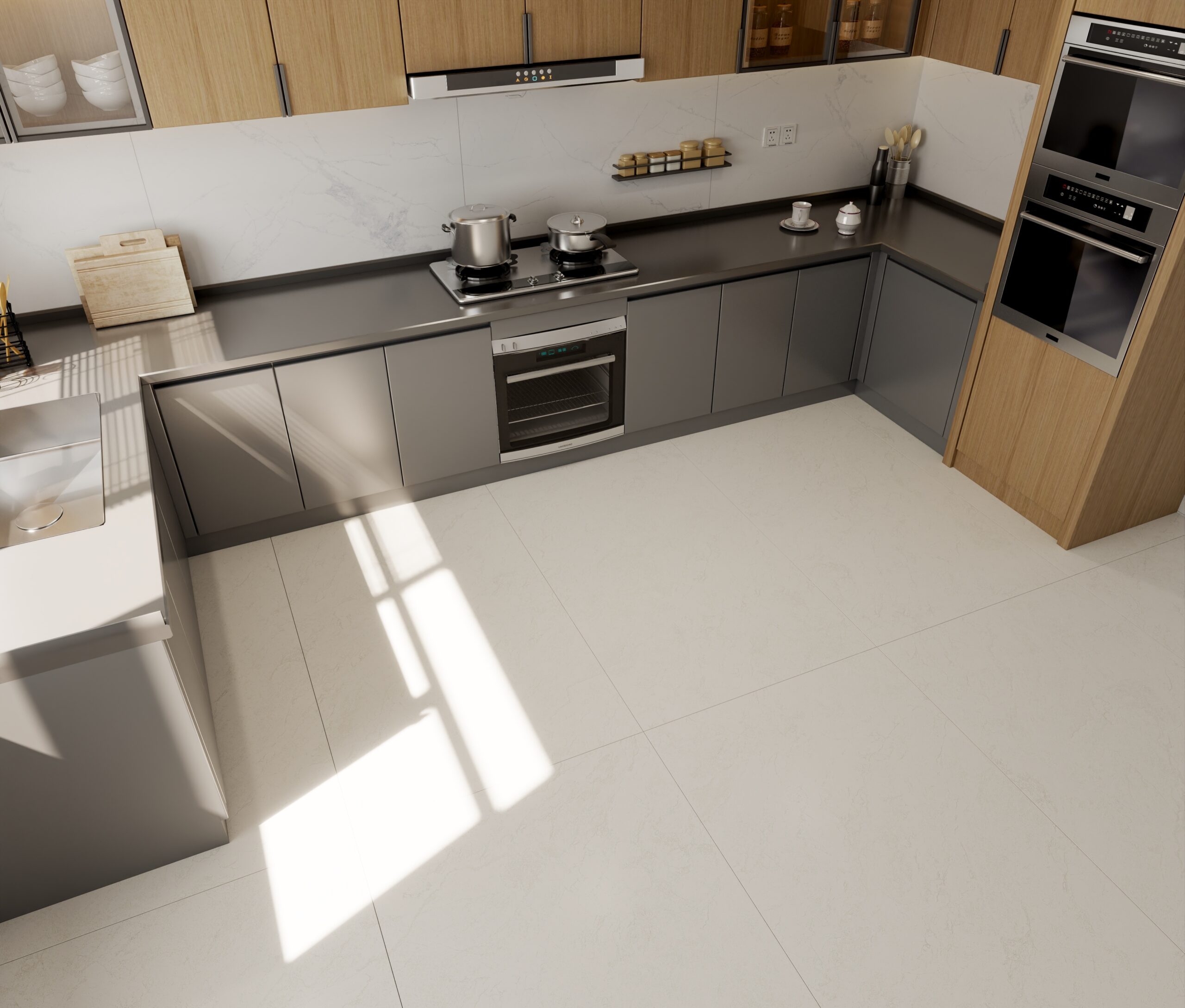
Choosing the best flooring for your kitchen is a critical decision that balances aesthetics, durability, and practicality. The kitchen is a high-traffic area prone to spills, dropped items, and heavy foot traffic, meaning your flooring needs to withstand a lot while still complementing your home’s design. This guide will help you navigate the top kitchen flooring options, considering durability, water resistance, maintenance, and current trends in 2025.
Most durable kitchen flooring options
Durability is a key factor in kitchen flooring, ensuring your investment stands up to daily wear and tear.
Porcelain Tile:
- Why it’s Durable: Made from dense, fine clay fired at high temperatures, porcelain tile is extremely hard, scratch-resistant, and highly resistant to impact. It’s less porous than ceramic tile, making it more durable and stain-resistant.
- Best For: High-traffic kitchens, homes with pets and children, and areas prone to spills.
Luxury Vinyl Plank (LVP) / Luxury Vinyl Tile (LVT):
- Why it’s Durable: LVP/LVT features multiple layers, including a robust wear layer that resists scratches, scuffs, and stains. Its flexible yet rigid core makes it highly resilient to impacts and daily activity.
- Best For: Busy kitchens, homes with pets, and those seeking a durable, low-maintenance option that mimics wood or stone.
Natural Stone Tile (e.g., Slate, Quartzite):
- Why it’s Durable: Natural stone is incredibly hard and long-lasting, capable of withstanding heavy foot traffic and resisting damage. Each piece is unique, adding a luxurious and timeless appeal.
- Best For: High-end kitchens where unique aesthetics and extreme durability are desired. Requires proper sealing to maintain integrity.
Concrete:
- Why it’s Durable: Concrete is one of the most robust flooring materials available, ideal for high-traffic areas. When properly sealed, it’s resistant to stains, impacts, and wear.
- Best For: Modern, industrial-style kitchens.
- Engineered Hardwood:
- Why it’s Durable: While not solid hardwood, engineered hardwood is constructed with multiple layers of wood and plywood, making it more stable and resistant to moisture fluctuations than solid hardwood. Its top layer is real wood, offering the beauty of traditional hardwood.
- Best For: Those who desire the look of real wood with improved stability in a kitchen environment.
Water-resistant vs. Waterproof materials
Understanding the difference between water-resistant and waterproof is crucial for kitchen flooring, given the high likelihood of spills and leaks.
- Water-Resistant Flooring:
- Definition: Can withstand water exposure to some extent, but not prolonged contact. It provides a degree of protection against minor spills as long as they are promptly cleaned up. If water seeps into seams or is left for an extended period, the material can still be damaged (e.g., swell, warp).
- Examples: Some laminate flooring (especially those with water-resistant cores), and traditional engineered hardwood (though less resistant than specific “waterproof” versions).
- Best For: Kitchens where spills are infrequent and quickly addressed. Requires more vigilance.
- Waterproof Flooring:
- Definition: Designed to be impervious to water, meaning water will not penetrate the flooring material, regardless of exposure time. This offers ultimate protection against spills, leaks, and high humidity.
- Examples:
- Luxury Vinyl Plank (LVP) and Sheet Vinyl: Most LVP and sheet vinyl products are 100% waterproof, making them excellent choices for kitchens.
- Porcelain and Ceramic Tile: When installed correctly with proper grout and sealer, tile floors are fully waterproof.
- Sealed Concrete: Once sealed, concrete floors are completely waterproof.
- Waterproof Engineered Hardwood: Some engineered hardwood products are now manufactured with waterproof cores and coatings, making them suitable for kitchens.
- Best For: Any kitchen, especially those with high activity, pets, children, or a higher risk of spills and leaks. Provides peace of mind.
Key Distinction: For kitchens, waterproof flooring is generally the superior choice due to the inevitable presence of water. While water-resistant options are more affordable, the potential for damage from even a small, unnoticed leak can lead to more costly replacements in the long run.
Tile, vinyl, hardwood, or laminate: Which to choose?
Each popular kitchen flooring material comes with its own set of pros and cons.
- Porcelain and Ceramic Tile:
- Pros: Extremely durable, highly water-resistant (waterproof when sealed), easy to clean, vast array of styles, colors, and patterns, excellent for radiant heating.
- Cons: Hard and cold underfoot (can be uncomfortable for long standing periods), grout lines can collect dirt and require sealing, can crack if heavy items are dropped or subfloor shifts, installation is labor-intensive and often requires a professional.
- Best For: Homeowners prioritizing durability, water resistance, and design versatility.
- Luxury Vinyl Plank (LVP) / Luxury Vinyl Tile (LVT):
- Pros: 100% waterproof, highly durable (scratch and stain-resistant), affordable, comfortable and quieter underfoot than tile or hardwood, easy to install (often DIY-friendly with click-lock systems), realistic wood and stone looks.
- Cons: Lower resale value than natural materials, can dent under heavy furniture, may look artificial in bright lighting if not high-quality.
- Best For: Busy households, those on a budget, and anyone seeking a practical, stylish, and waterproof flooring solution.
- Hardwood (Solid or Engineered):
- Pros: Timeless, classic appearance, adds significant home value, comfortable underfoot, can be refinished multiple times (solid hardwood), warm and inviting.
- Cons: Solid hardwood is sensitive to moisture and spills (prone to warping/cupping), engineered hardwood is more stable but still needs quick cleanup. Can scratch and dent (especially softer woods), more expensive than vinyl or laminate.
- Best For: Homeowners prioritizing classic aesthetics and resale value, willing to commit to diligent maintenance and quick spill cleanup.
- Laminate:
- Pros: Very affordable, easy to install (DIY-friendly), can mimic wood or tile convincingly, relatively durable against scratches and dents, softer underfoot than tile.
- Cons: Not truly waterproof (most types are only water-resistant and prone to swelling if exposed to prolonged moisture), cannot be refinished, shorter lifespan than other options, can sound hollow underfoot.
- Best For: Budget-conscious remodels, temporary solutions, or areas with very low moisture risk.
Maintenance and cleaning considerations
Choosing kitchen flooring that is easy to maintain will save you time and effort in the long run.
- General Tips for All Kitchen Floors:
- Clean Spills Immediately: This is the most important rule for any kitchen floor to prevent stains and damage.
- Sweep/Vacuum Regularly: Remove loose dirt, crumbs, and grit that can scratch the floor over time. Use a vacuum with a bare floor setting.
- Use Doormats: Place mats at entryways to trap dirt and moisture before it’s tracked into the kitchen.
- Furniture Protectors: Use felt pads or floor protectors under furniture legs to prevent scratches and dents.
- Specific Material Maintenance:
- Porcelain/Ceramic Tile: Mop with warm water and a pH-neutral cleaner. Avoid abrasive cleaners that can damage the glaze. Grout lines may require regular scrubbing and periodic sealing (unless using epoxy grout).
- LVP/LVT: Very low maintenance. Simply sweep or vacuum, then mop with a damp mop and a mild, pH-neutral cleaner. Avoid excessive water.
- Hardwood (Solid & Engineered): Sweep or vacuum regularly. Use a slightly damp (not wet) mop with a hardwood-specific cleaner. Avoid excessive water, steam mops, and harsh chemicals. Promptly wipe up all spills.
- Laminate: Dry mop frequently. For cleaning, use a damp (not wet) mop with a laminate-specific cleaner. Avoid excessive water, as it can cause swelling. Never wax or polish laminate.
Kitchen flooring trends in 2025
Kitchen flooring trends in 2025 are leaning towards natural looks, subtle textures, and enhanced practicality.
- Wide Plank Wood-Look Vinyl: The popularity of wide planks (7 inches or wider) continues, creating a more spacious and luxurious feel with fewer seams. Realistic wood grain textures (often with Embossed-in-Register technology) in LVP are highly sought after.
- Concrete-Look Vinyl: For a modern, industrial, or minimalist aesthetic, concrete-look LVT offers the sophisticated visual of polished concrete without the drawbacks of real concrete (hardness, coldness, porosity).
- Marble-Look LVT or SPC: Achieving the opulent look of Carrara or Calacatta marble with the practicality of vinyl is a major trend. Large-format tiles (e.g., 12″x24″ or larger) minimize grout lines, mimicking real stone slabs.
- Herringbone and Chevron Patterns: These classic parquet patterns are making a strong comeback, turning the kitchen floor into a stunning focal point. They add movement, texture, and timeless sophistication, especially popular in LVP.
- Matte Finishes: High-shine, glossy floors are taking a backseat to matte finishes. Matte floors offer a more understated and sophisticated look, reduce glare, and are more effective at hiding minor dust and footprints.
- Warm Earth Tones and Natural Wood: A shift from cool grays to warmer hues is prominent. Natural wood tones, especially lighter and unstained varieties like white oak, are popular, as are earthy tones in tile and stone-look options.
- Sustainable Materials: There’s a growing demand for eco-friendly flooring options like cork and bamboo, as well as reclaimed hardwood, reflecting a broader trend towards sustainable living. Look for low-VOC or zero-VOC certified products.
- Mixed Materials: Combining different flooring materials (e.g., tile in the main cooking area and wood-look LVP in a dining nook) can create visual interest and define zones.
By considering these factors, you can choose kitchen flooring that not only looks beautiful but also performs exceptionally well for years to come, enhancing your home’s functionality and value.
Ready to upgrade your kitchen flooring? LA Home Builders specializes in comprehensive kitchen remodels, offering expert guidance on selecting and installing the perfect flooring to match your style, budget, and lifestyle. Contact us today for a free consultation and let’s create the kitchen of your dreams!