


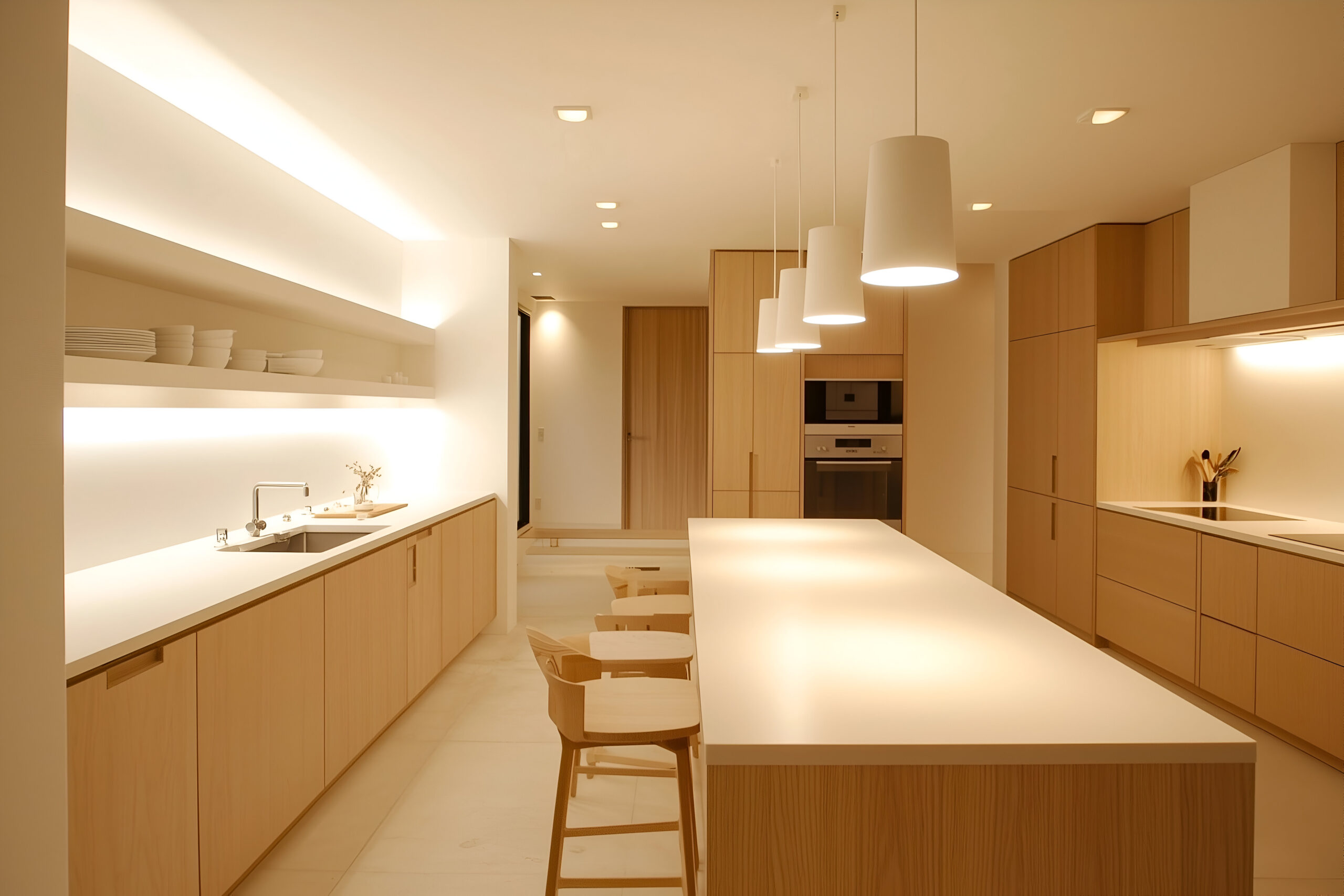
Kitchen island lighting is more than just a functional necessity; it’s a pivotal design element that can define the style of your kitchen, provide essential task illumination, and set the overall ambiance. The right lighting can transform your island into a stunning focal point and a highly efficient workspace. This guide will explore various lighting options, how to choose the right size and placement, considerations for color temperature, and trending designs to help you illuminate your kitchen island with both style and purpose.
Pendant, chandelier, and linear options
The type of fixture you choose for your kitchen island will significantly impact the aesthetic and light distribution.
- Pendant Lights:
- Description: Individual light fixtures suspended from the ceiling by a rod, cord, or chain. They come in an endless variety of shapes, sizes, and materials (glass, metal, fabric, wood).
- Effect: Offer focused task lighting directly onto the island surface. When used in multiples, they create visual rhythm and can define the island as a distinct zone. They are highly versatile and can suit almost any kitchen style, from minimalist to industrial or farmhouse.
- Best For: Most kitchen islands. You typically use two or three pendants, depending on the island’s length and the size of the pendants.
- Chandeliers (Island/Linear Chandeliers):
- Description: While traditional chandeliers are often associated with dining rooms, “island” or “linear” chandeliers are specifically designed for long, rectangular spaces. They feature multiple light sources on a single, elongated fixture.
- Effect: Provide more diffused and widespread illumination across the entire island. They can serve as a grand statement piece, adding a touch of luxury and sophistication.
- Best For: Larger islands where a single, impactful fixture is desired, or when you want to avoid multiple ceiling penetrations.
- Linear Lights:
- Description: A sleek, often minimalist fixture that provides continuous, even illumination along the length of the island. This can be a suspended bar with multiple integrated light sources or a linear plate on the ceiling with several hanging pendants.
- Effect: Creates a clean, modern, and uncluttered look. Excellent for providing uniform task lighting without visual distractions.
- Best For: Contemporary, minimalist, or industrial kitchens where clean lines and a streamlined aesthetic are prioritized.
- Recessed Lighting (as supplement):
- Description: Lights installed directly into the ceiling, providing general ambient illumination.
- Effect: While not primary island lighting, recessed lights can supplement pendants or chandeliers, ensuring overall brightness in the kitchen and minimizing shadows.
How to choose the right fixture size
Selecting the correct size for your island lighting is crucial for both aesthetics and functionality. An undersized fixture can look lost, while an oversized one can overwhelm the space.
- Pendant Diameter/Width:
- General Rule: The diameter of a single pendant (or the combined width of multiple pendants) should generally be about one-third the width of your island. This ensures proportionality.
- Don’t Go Too Small: Mini pendants tend to look too small over most kitchen islands. Opt for pendants that are at least 1 foot (30 cm) in diameter for a substantial look and adequate light output.
- Linear Chandelier/Fixture Length:
- Rule of Thumb: A linear fixture should be approximately two-thirds to three-quarters the length of your island. This provides balanced illumination without extending beyond the island’s edges.
- Inset: Aim for an inset of about 6-12 inches (15-30 cm) from each end of the island to the outer edge of the fixture.
- Ceiling Height:
- Proportionality: In kitchens with high or vaulted ceilings, you may need larger fixtures or longer suspension rods/cords to ensure the lighting feels proportionate to the expansive space.
- Visibility: Ensure the fixture doesn’t obstruct sightlines across the island, especially if you have an open-concept layout.
Tip: Use balloons or cardboard cutouts to simulate the size and placement of your chosen fixtures. Hang them at different heights and distances to visualize the effect before committing to installation.
Matching lighting to island length and layout
The length and configuration of your kitchen island will dictate the number and arrangement of your light fixtures.
- Island Length Guidelines:
- 4-5 Foot (1.2-1.5 m) Islands: Typically, two pendants provide balanced lighting without overcrowding.
- 6-8 Foot (1.8-2.4 m) Islands: Can accommodate two or three pendants, depending on the size of the individual fixtures. Two larger pendants or three medium-sized ones work well. A linear chandelier is also a good option here.
- 9-12 Foot (2.7-3.6 m) Islands: Usually require three or more pendants for ample and even light distribution. A long linear chandelier is also an excellent choice.
- Pendant Spacing:
- Even Distribution: Pendants should be spaced evenly over the island. A common guideline is to space them 24-36 inches (60-90 cm) on center (measured from the center of one fixture to the center of the next).
- Edge Clearance: Leave approximately 6-12 inches (15-30 cm) of space from the outside edge of the outermost pendants to the ends of the island. This prevents the lights from feeling “off-balance” or too close to the edge.
- Island Layout Considerations:
- Rectangular/Linear Islands: Ideal for multiple pendants or linear chandeliers.
- Square Islands: A single, larger pendant or a cluster of smaller pendants can work well as a central focal point.
- L-Shaped/U-Shaped Islands: May require a combination of lighting solutions, such as a linear chandelier over the longest section and a single pendant over a corner or seating area.
- Islands with Integrated Sinks/Cooktops: Position lighting to provide optimal task illumination over these functional zones, ensuring no shadows are cast.
Color temperature and bulb types
The color temperature of your light bulbs, measured in Kelvin (K), significantly influences the mood and functionality of your kitchen.
- Color Temperature (Kelvin Scale):
- Warm White (2700K-3000K): Emits a soft, yellowish glow, similar to incandescent bulbs. Creates a cozy, inviting, and intimate atmosphere. Best for traditional or farmhouse kitchens, or for ambient lighting.
- Neutral White (3500K-4000K): A balanced light that is neither too warm nor too cool. Provides good visibility for everyday tasks and accurate color rendition (important for food prep). Often recommended for general kitchen lighting.
- Cool White/Daylight (5000K-6500K): Emits a bright, bluish-white light, similar to natural daylight. Enhances focus and detail, making it ideal for task lighting. Best for modern, minimalist, or industrial kitchens.
- Bulb Types:
- LED (Light Emitting Diode):
- Pros: Highly energy-efficient, long lifespan, available in a wide range of color temperatures, dimmable options, and produce very little heat.
- Cons: Higher upfront cost, but savings accrue over time.
- Recommendation: LEDs are the most recommended bulb type for kitchen island lighting due to their efficiency, versatility, and longevity.
- Halogen:
- Pros: Good color rendering, dimmable.
- Cons: Less energy-efficient than LEDs, produce more heat.
- Incandescent:
- Pros: Warm glow, inexpensive.
- Cons: Very energy-inefficient, short lifespan, produce a lot of heat. (Being phased out).
- LED (Light Emitting Diode):
- CRI (Color Rendering Index): Aim for bulbs with a high CRI (90 or above) in the kitchen. A high CRI ensures that colors (especially food colors) appear true and vibrant under the light.
- Lumens: Lumens measure brightness. Ensure your chosen fixtures and bulbs provide enough lumens for adequate task lighting over your island.
- Dimmers: Always install dimmer switches for your island lighting. This allows you to adjust the brightness to suit different activities and moods, from bright task lighting for cooking to a softer glow for entertaining.
Installation height guidelines
Proper installation height is crucial to ensure your island lighting is both functional and visually appealing, without obstructing views or causing glare.
- Distance from Countertop:
- General Rule: Pendant lights and linear fixtures should typically hang 30-36 inches (75-90 cm) from the bottom of the fixture to the top of the kitchen island countertop.
- Personal Preference: This range allows for customization. Taller individuals might prefer lights hung closer to 36 inches, while shorter individuals might prefer closer to 30 inches to avoid obstruction.
- Ceiling Height Adjustments:
- Standard 8-Foot (2.4 m) Ceilings: Aim for the lower end of the 30-36 inch range (e.g., 30 inches) to maintain proportionality.
- Higher Ceilings (9+ feet / 2.7+ m): You can hang pendants closer to the 36-inch mark or slightly higher (up to 40 inches / 100 cm) to ensure they don’t look “too low” in a tall space.
- Visual Comfort and Glare:
- Ensure the bottom of the fixture is above eye level for most people standing around the island to prevent glare.
- The light should illuminate the workspace effectively without casting harsh shadows.
- Testing Height: Before final installation, use a temporary setup (e.g., holding the fixture in place or using a string with a weight) to test different heights. Stand at the island, sit at the island, and walk around it to ensure the height is comfortable and doesn’t obstruct views.
By carefully considering these factors, you can select and install kitchen island lighting that not only illuminates your workspace effectively but also enhances the overall style and ambiance of your kitchen, making it a truly inviting and functional heart of your home.
Ready to illuminate your kitchen island with stunning and functional lighting? LA Home Builders specializes in comprehensive kitchen remodels, offering expert design consultation and professional installation of all types of kitchen lighting to perfectly complement your style and needs. Contact us today for a free consultation and let’s brighten up your dream kitchen!